Canasta Rules: How to Play and Score Canasta
In canasta, you and a partner build melds, which are groups of cards of the same rank, and try to turn them into canastas: melds of seven or more cards. Your side scores for the cards you meld, big bonuses for each canasta and for going out, and loses the value of anything left in your hands. The first side to reach 5,000 points over several hands wins.
This guide covers classic partnership canasta for four players, two against two, with two-player rules as a variant. The rules about wild cards, 3s and the discard pile are where most new players trip up, so each one has its own step below. If you only need the numbers, jump to scoring.
On this page
The goal
Your side wants to score more than the other side, hand after hand, until someone reaches 5,000. Points come from three places:
- Bonuses. Each canasta is worth 300 or 500, each red 3 is worth 100, and going out is worth 100.
- Melded cards. Every card you lay on the table counts its value for your side.
- Cards left in hand. When the hand ends, whatever you and your partner still hold counts against you.
A hand ends when one player goes out, which means getting rid of every card in their hand. You can only go out once your side has made at least one canasta, so the canastas come first.
What you need
- Two standard 52-card decks plus four jokers, shuffled together: 108 cards in all. The decks don't need to match, but it's easier to shuffle two that are the same size.
- Four players sitting in partnerships, with partners facing each other across the table.
- A score sheet and a pen, or the canasta score keeper on your phone. Scores run into the thousands, so a sheet with room for running totals helps. The printable score sheets include one for canasta.
Card values matter all through the game, both for your first meld and for the score at the end of each hand:
| Card | Points each |
|---|---|
| Joker | 50 |
| Ace | 20 |
| 2 (wild) | 20 |
| King, queen, jack, 10, 9, 8 | 10 |
| 7, 6, 5, 4 | 5 |
| Black 3 | 5 |
| Red 3 | 100 bonus (see below) |
Jokers and 2s are wild cards: they can stand in for any rank in a meld. Every other card is called a natural.
Setup and dealing
Pick a dealer by any method you like. The dealer shuffles and deals 11 cards to each player, one at a time, starting with the player on their left and going around to the left (clockwise).
The rest of the cards go face down in the middle as the stock, the pile you draw from. The dealer turns the top card of the stock face up beside it to start the discard pile, the face-up pile where each player throws away a card at the end of their turn.
If that first card is a wild card or a red 3, turn more cards onto it until a natural card shows. The pile then starts out frozen.
The player to the dealer's left plays first, and play continues to the left. Partners don't share their hands or talk about them, but every meld either of you makes belongs to your side, and you can both add to it.
A turn, step by step
Lay out any red 3s
Red 3s are bonus cards, not playing cards. If you were dealt any, put them face up on the table at your first turn and draw one card from the stock to replace each. Do the same whenever you draw one later. Each red 3 is worth 100 to your side, and all four together are worth 800. The catch: if your side hasn't melded anything by the end of the hand, your red 3s count against you instead.
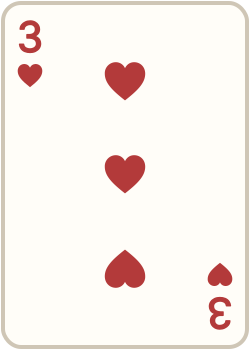
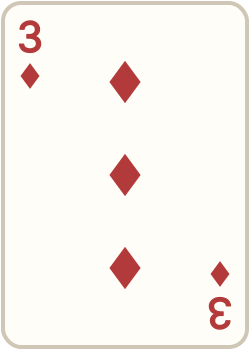
Red 3s never stay in your hand. Put them face up in front of you and draw a replacement for each. Draw one card, or take the whole pile
Most turns start by drawing the top card of the stock. Instead, you may take the discard pile, but only if you can use its top card in a meld right away, and you take every card in the pile, not just the top one. A big pile can win a hand, so the rules for taking it come up again in the next step.
Check whether you can take the pile
You can never take the pile when its top card is a wild card or a black 3. Otherwise you need to meld the top card at once, either with matching cards from your hand or by adding it to one of your side's melds.
The pile is frozen when it holds a wild card, or for any side that hasn't made its first meld yet. A frozen pile can only be taken with a natural pair from your hand that matches the top card.
When the pile isn't frozen, you have two more ways to take it: with one natural card that matches the top card plus a wild card, or by adding the top card to a meld your side already has. Some groups don't allow the natural-plus-wild way, so check before you start.
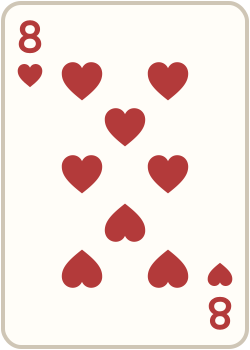
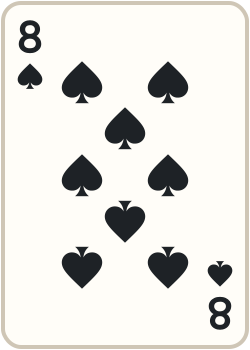
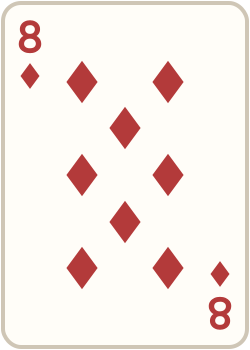
The top discard is the 8 of hearts. Holding two natural 8s, you can always take the pile, even when it's frozen. Meld if you want to
A meld is three or more cards of the same rank laid face up on the table. Canasta has no runs, so 5-6-7 of hearts isn't a meld. Each meld needs at least two naturals and can hold no more than three wild cards. Your side can have only one meld of each rank: if your partner has melded 9s, you add your 9s to theirs.
You may also add cards to your side's melds, including wild cards, as long as each meld keeps at least two naturals and no more than three wilds.
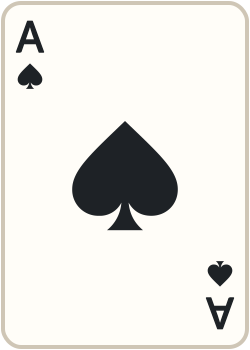
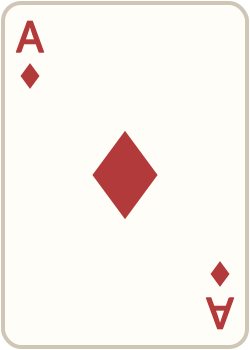
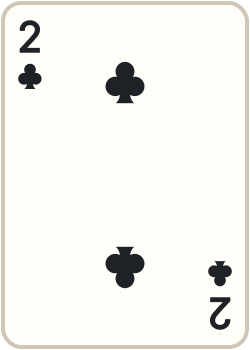
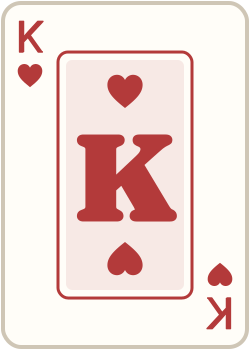
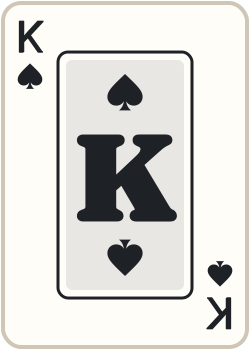
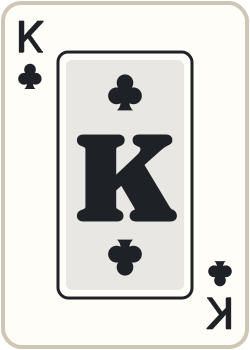
Two melds: two aces with a wild 2, and three natural kings. Melds are always one rank, never runs. Meet the minimum on your first meld
The first time your side melds in a hand, the cards you put down that turn must add up to a minimum, based on your side's total score before the hand:
Your side's score Minimum first meld Below 0 15 0 to 1,495 50 1,500 to 2,995 90 3,000 or more 120 Only card values count. Red 3s and canasta bonuses don't help you reach it. You can put down more than one meld to make the total. Once your side is down, neither of you has to meet a minimum again that hand.
Ace (20) + ace (20) + 2 (20) = 60, enough for a side that needs 50. Discard one card
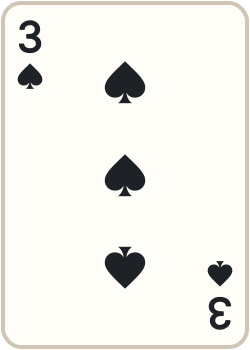
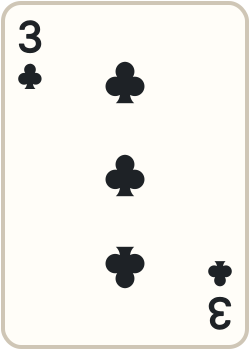
End your turn by placing one card face up on the discard pile. A black 3, like the one shown, is a handy discard: the next player can't take the pile while it sits on top. It doesn't freeze the pile, though, so once someone covers it, the pile is open again.
Black 3s can't be melded during normal play. The only time you can meld them is on the turn you go out.
Go out when your side has a canasta
A canasta is a meld of seven or more cards with at least four naturals. A natural canasta has no wild cards at all and is worth a 500 bonus. A mixed canasta has one to three wilds and is worth 300.
Once your side has at least one canasta, you may go out by getting rid of your last card, either by melding it or by discarding it. The hand ends at once, and your side scores 100 for going out.
If you meld your whole hand in a single turn, a canasta included, without having melded anything earlier and without adding to your partner's melds, you've gone out concealed, and the bonus is 200 instead of 100. Your partner may already have melded. If your side hasn't melded yet and you take the discard pile that turn, the usual minimum for a first meld still applies.
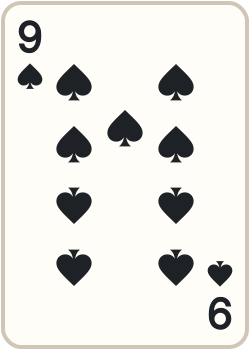
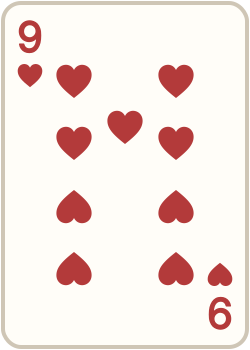
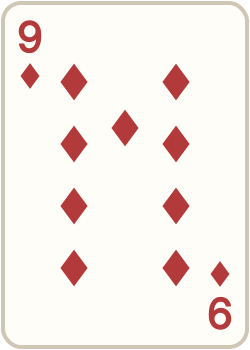
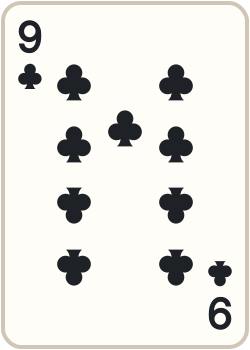
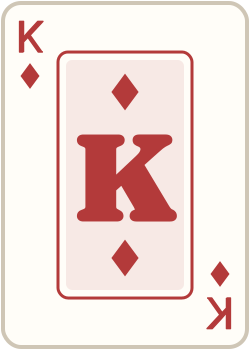
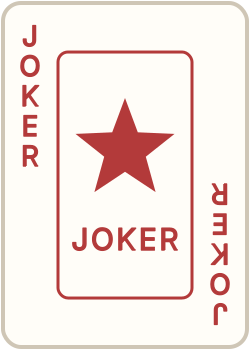
A natural canasta of seven 9s and a mixed canasta of five kings, a 2 and a joker.
If the stock runs out before anyone goes out, play carries on while each player takes the last discard. You must take it if the pile isn't frozen and the card fits one of your side's melds. The hand ends when a player can't take the discard, or chooses not to when they're allowed to, and both sides score what they have.
Scoring
At the end of each hand, each side adds up its own score. It's the bonuses, plus the value of every card the side has melded, minus the value of the cards still in both partners' hands.
| Item | Points |
|---|---|
| Natural canasta (no wild cards) | 500 each |
| Mixed canasta (one to three wild cards) | 300 each |
| Red 3 | 100 each, or 800 for all four |
| Red 3s when your side has melded nothing | Minus the same amount |
| Going out | 100 |
| Going out concealed | 200 in total |
| Melded cards | Card values, added |
| Cards left in your side's hands | Card values, subtracted |
The cards inside a canasta count twice in a sense: once for the bonus and again for their own values. A natural canasta of seven 9s scores 500 for the bonus plus 70 for the cards.
When a side's running total reaches 5,000 at the end of a hand, the game ends. If both sides pass 5,000 in the same hand, the side with the higher total wins.
Your side's total also sets your minimum first meld for the next hand, so keep running totals, not just hand scores. The score keeper below does that for you, shows each side's minimum before every hand, and has a helper that adds up melded cards by kind.
Teams and house rules
Scoring is the same either way. For two players, each column is one player: rename them above.
| Round | Team 1 | Team 2 |
|---|---|---|
| No rounds yet. Enter the first round below. | ||
| Total | 0 | 0 |
Round 1
Minimum first meld this hand: Team 1 50, Team 2 50.
Your game is saved in this browser only, so a refresh won't lose it. Nothing is sent anywhere.
You can also open it on its own page: the canasta score keeper. Every score keeper on the site is listed under all tools.
A worked example
Here's a full hand from the side that went out. First, the card points for two of its melds.
Counting the cards in two melds
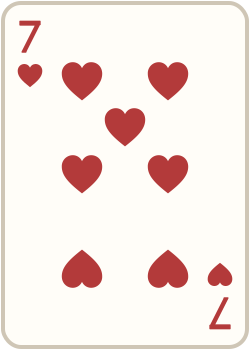
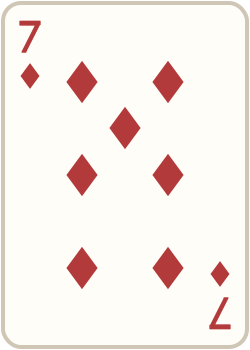
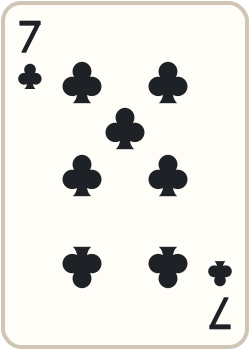
The canasta has five kings at 10 each (50), one 2 (20) and one joker (50): 120. The 7s are worth 5 each: 15. Together that's 120 + 15 = 135 points in cards.
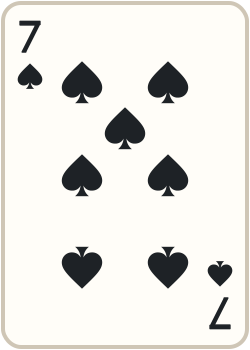
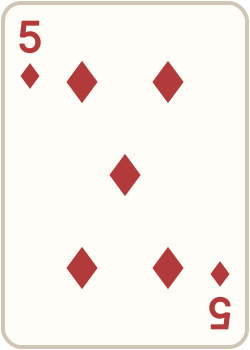
The same side also has a natural canasta of seven 9s (7 × 10 = 70) and a meld of two aces with a 2 (20 + 20 + 20 = 60). Its melded cards add up to 135 + 70 + 60 = 265. It laid out two red 3s during the hand, and one partner went out. The other partner was left holding a 7, a 5 and a black 3.
The side that went out
| Item | Points |
|---|---|
| Natural canasta | 500 |
| Mixed canasta | 300 |
| Two red 3s | 200 |
| Going out | 100 |
| Melded cards | 265 |
| Cards left in hand | −15 |
| Total | 1,350 |
The other side never made a canasta. It melded cards worth 150, laid out one red 3, and was caught holding 85 points of cards when the hand ended.
The other side
One red 3 is 100, plus 150 for melded cards, minus 85 for the cards in hand: 100 + 150 − 85 = 165 points. Because this side had melded, its red 3 counted for it. With no melds at all, the same red 3 would have cost it 100 instead.
After this hand, the first side is at 1,350 and needs 50 for its next first meld. Had it reached 1,500, its minimum would have jumped to 90.
House rules and variants
Strategy tips
- Get your first meld down early. The pile is frozen against you until your side has melded, and red 3s count against you if you never do. Once you're down, the pile gets much easier to take.
- Hold natural pairs. A natural pair is the one thing that lets you take a frozen pile. If you can, keep a pair or two of middle cards rather than melding every pair you have.
- Freeze a big pile on purpose. Discarding a wild card freezes the pile for everyone. When the pile is large and your opponents look ready to take it, it can be worth giving up a wild to protect it.
- Use black 3s as blockers. A black 3 on top stops the next player taking the pile for one turn. Save yours for the moment your left opponent looks like they want it.
- Watch the discards. If an opponent takes the pile and melds jacks, don't throw a jack. Each discard is a chance for them to pick up the whole pile.
- Go out when you're ahead. Ending the hand early catches the other side with cards in hand and stops them finishing their canastas. If you're behind, keep building instead.
- Mind the 1,500 and 3,000 lines. As your total climbs, your first meld gets harder to make. Holding aces and jokers helps you reach 90 or 120.
FAQ
How many cards do you deal in canasta?
In four-player partnership canasta, each player gets 11 cards. The rest form the stock, and the top card is turned up to start the discard pile.
Are 2s wild in canasta?
Yes. Both 2s and jokers are wild. A meld can hold up to three wild cards and must have at least two naturals.
What do black 3s do in canasta?
A black 3 on top of the discard pile stops the next player from taking it. It doesn't freeze the pile. You can't meld black 3s except on the turn you go out, and each one left in your hand costs 5 points.
What is the minimum first meld in canasta?
It depends on your side's score: 15 if you're below 0, 50 from 0, 90 from 1,500 and 120 from 3,000. Only the card values count toward it, not bonuses.
How many points do you need to win canasta?
5,000. The game ends after the hand in which a side reaches it, and if both sides pass 5,000, the higher total wins.
Can you play canasta with two players?
Yes. Each player plays alone with the same scoring. Two-player rules usually change the deal and the draw, so agree on them first.
Keep score with the canasta score keeper, check the scoring table, or try another rummy-style game: how to play rummy and gin rummy rules.