How to Play Mahjong With 2 Players (and 3)
You can play mahjong with two or three players. The turn works the same way: draw a tile, discard a tile, call the tiles you need. What changes is the setup, a few rules, and how fast hands come together. American mahjong has official rules for smaller tables; Chinese and Japanese players adapt the game in a few common ways.
Agree on the version before the first deal. Small-table rules vary more than four-player rules, so a minute of discussion saves arguments later.
On this page
American mahjong with 2 or 3 players
The National Mah Jongg League publishes official rules for two and three players in its rule book. The main differences from the four-player game:
- No Charleston. With fewer than four players there's no tile passing at all. East simply discards to start play.
- All 152 tiles are used. Build all four walls as usual, even though one or two seats are empty.
- The deal is the same. East takes 14 tiles and every other player 13. Nobody is dealt tiles for an empty seat.
Everything else follows the normal rules: the card, JokerA wild tile in American mahjong. It can stand in for any tile in a group of three or more identical tiles, but never in a pair or as a single tile. Jokers can't be passed in the Charleston.See the full glossary, ExposureA set you have laid face up on your rack, usually after calling a discard. Exposed sets can't be changed later.See the full glossary, calling and going out. With three players, the discarder still pays double and the other player pays the hand's value; a self-drawn win is paid double by both.
Two players sit opposite each other and play the same way, with two empty seats. Hands take longer to build, because there are fewer discards to call. There's also a separate two-player game called Siamese Mah Jongg, with its own rules and card; it isn't the same as the League's two-player rules.
Chinese mahjong with 2 or 3 players
There's no single standard here. Groups usually pick one of these approaches:
Leave a seat empty. Build four walls with the full set and deal to three players, leaving the fourth seat out. Everything else stays the same. This is the simplest choice and keeps every scoring rule intact.
Remove some tiles. Some groups take out tiles to speed things up, such as one suit, or the North wind and its flower and season. Fewer tiles means more pungs and fewer wasted draws, but some hands and scores no longer fit.
Two players: sit opposite each other. One common informal version deals from a full set, East 14 and the other player 13, and plays without chows or flowers. Another uses only one suit, so ChowThree tiles in a row in the same suit, such as 4-5-6 of dots. Used in Chinese and Japanese mahjong, not in American mahjong. You can call a chow only from the player on your left.See the full glossary are easy and hands come together quickly.

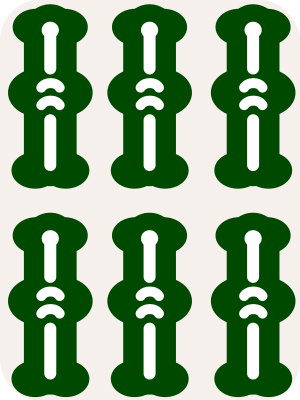
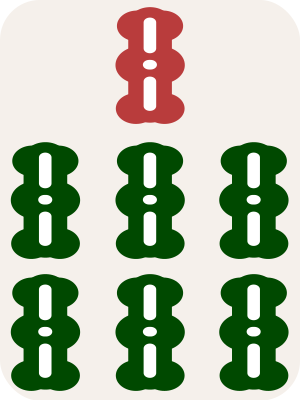
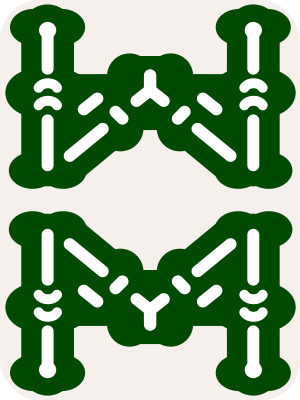
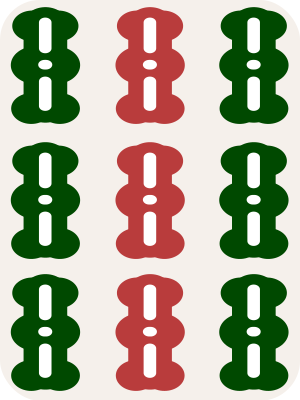
Remember that in Chinese mahjong a chow can only be called from the player on your left. At a three-player table with an empty seat, the player after the gap may get no chows from that seat at all, which is another reason many small tables stick to pungs.
Japanese three-player mahjong (sanma)
Three-player riichi, called sanma, is popular in Japan and online, and its rules are well settled:
- Remove the 2 to 8 of characters. Only the 1 and 9 of craks stay, leaving 108 tiles.
- No chows. You can still call pungs, kongs and winning tiles, and you can build runs from your own draws.
- North is often a bonus. With no North seat, many rules let you set a North wind aside as a bonus tile (DoraBonus tiles in Japanese mahjong. Each dora in your winning hand adds value, but dora alone can't make a hand a winner.See the full glossary) and draw a replacement.
- Payments change. Only two players pay on a self-drawn win, and rule sets differ on how that's balanced.

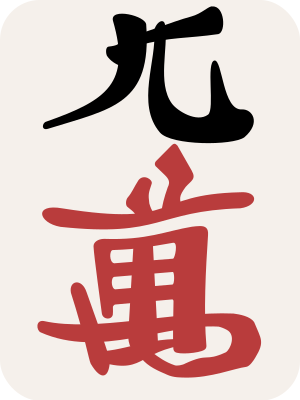
Because there are fewer tiles and every player draws more often, sanma hands are faster and bigger than in the four-player game. Flushes and high-scoring hands come up much more often.
Two-player riichi exists only as an informal game, usually using all 136 tiles with players sitting opposite each other.
Setting up a three-player American table
- Roll to choose East, as usual.
- Build all four walls, including one in front of the empty seat.
- Break the wall and deal: East takes 14 tiles, the other two players 13 each.
- Skip the Charleston (unless your group plays a house version).
- East discards, and play moves to the right, skipping the empty seat.
Tips for a smaller table
- Expect slower calling. With fewer players there are fewer discards, so plan to build more of your hand from the wall.
- Watch the discards even more closely. With only one or two opponents, it's easier to read what they're collecting.
- Agree on payments. Scoring tables are built for four players. Decide how the missing player's share is handled before you start.
- Use it to teach. Two-player games are a good way to practise with a new player, because you can talk through every choice.
FAQ
Can you play American mahjong with 3 people?
Yes. The National Mah Jongg League has official three-player rules: there's no Charleston, all four walls are built, East takes 14 tiles and the other two take 13. Some groups add a Charleston as a house rule.
Can you play mahjong with 2 players?
Yes, though it plays more slowly. American mahjong has official two-player rules. For Chinese mahjong, groups use informal versions, such as a one-suit game.
Which tiles do you remove for 3-player mahjong?
It depends on the style. Japanese sanma removes the 2 to 8 of characters. American mahjong removes nothing. Chinese groups vary: many keep the full set and leave a seat empty.
Is three-player mahjong harder?
Not harder, but different. Hands come together at a different pace, and some scores change. Most people enjoy it once they've agreed on the rules.
New to the game? Start with how to play mahjong, learn the tiles, print the cheat sheet, or see every guide on the beginner's hub.