Mahjong Tiles: Every Tile Explained (With Pictures)
A mahjong set is made of numbered suit tiles, honor tiles and, depending on the style, flowers and jokers. A Chinese set has 144 tiles, a Japanese set uses 136 and an American set has 152. Every set shares the same core: three suits numbered 1 to 9, four winds and three dragons, with four copies of each.
Use the tile guide below to see a full set for each style. Tap any tile for its name, its nicknames, how many come in a set and what it's used for.
On this page
Interactive tile guide
American set: 152 tiles
Dots (36 tiles)
Bams (bamboo) (36 tiles)
Craks (characters) (36 tiles)
Winds (16 tiles)
Dragons (12 tiles)
Flowers (4 tiles)
Seasons (4 tiles)
Jokers (8 tiles)

One of Bamboos
4 in a full American set
Also called: 1 Bamboo, 1 Sou, The Bird
A suit tile. Hands on the card ask for suit tiles in pungs, kongs, quints, pairs and single tiles. There are no called runs, although many hands use numbers in sequence. The 1 Bam is usually drawn as a bird rather than a single stick.
The three suits
Most of the tiles in any set belong to one of three SuitsThe three families of numbered tiles: dots, bams and craks, each numbered 1 to 9 with four copies of every tile.See the full glossary. Each suit runs from 1 to 9, and there are four copies of every tile, so each suit has 36 tiles and the three together make 108.
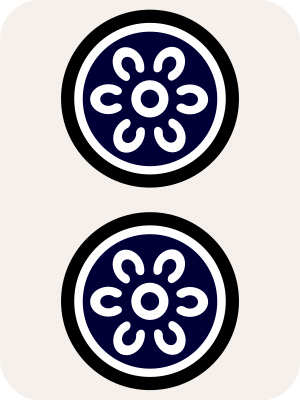
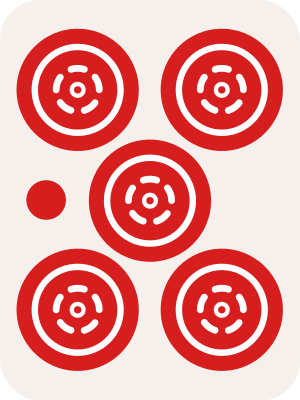
Dots are drawn as circles, and players also call them circles, coins or, in Japanese, pin. The 1 Dot is a single large, decorated circle.

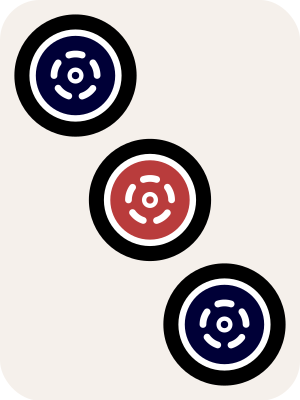
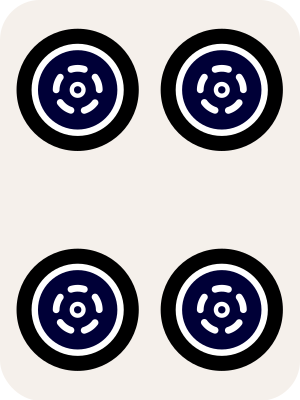
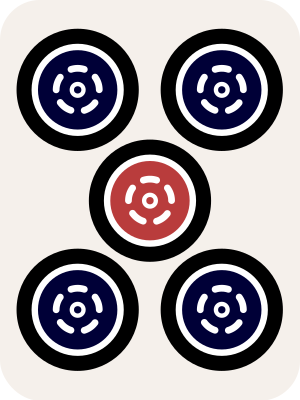
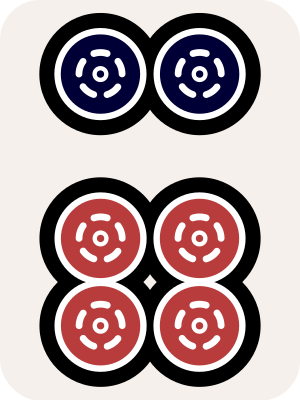
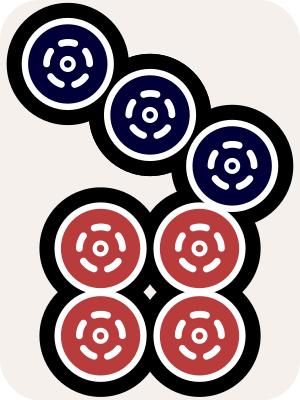
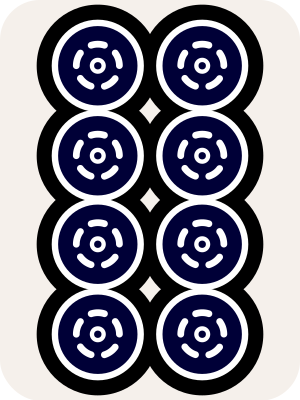
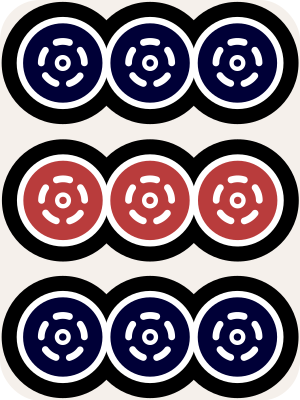
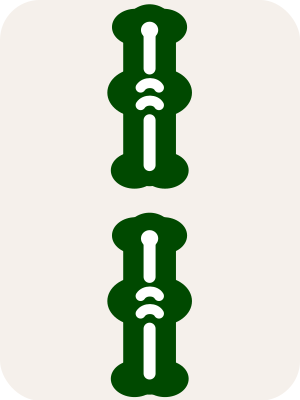
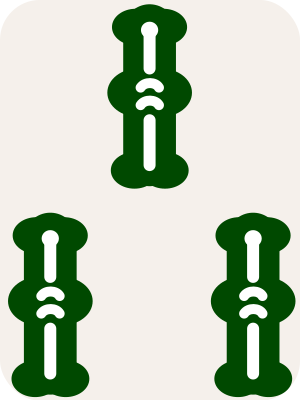
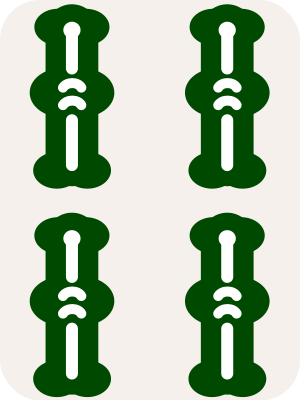
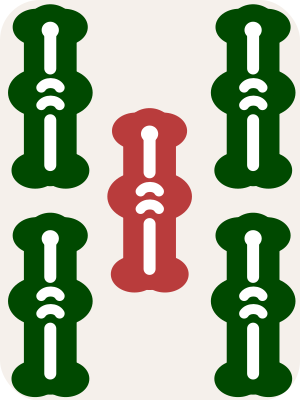
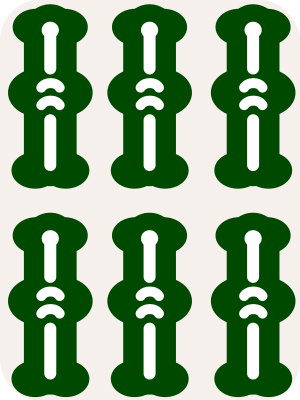
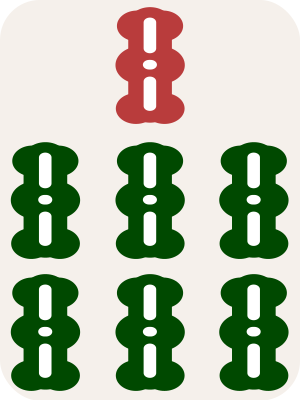
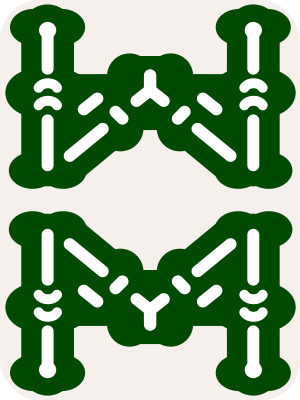
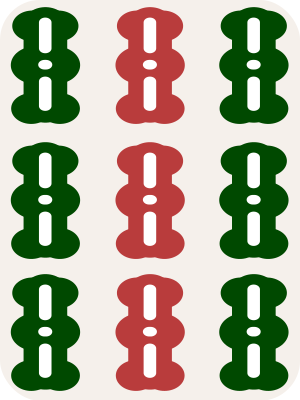
Bams are short for bamboo. Each tile shows that many bamboo sticks, except the 1 Bam, which is almost always a bird. That catches out many beginners: the bird is a 1. In Japanese the suit is called sou.
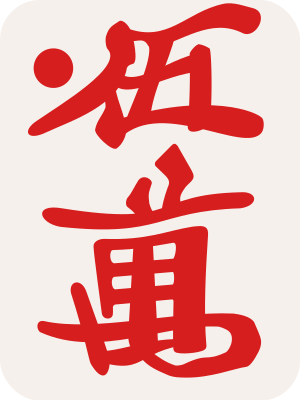
Craks are short for characters, sometimes spelled cracks. Each tile has a Chinese numeral at the top and the character for "ten thousand" below it, so you read the top symbol to know the number. American tiles usually add a small Arabic numeral in the corner, which helps. The Japanese name is man.
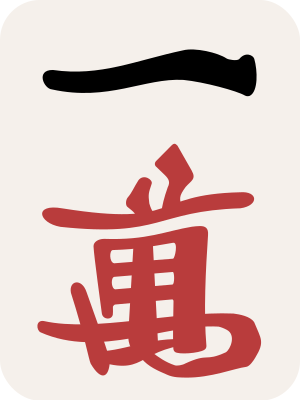
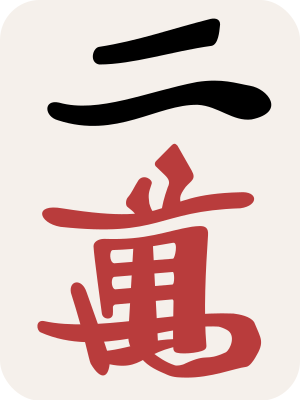
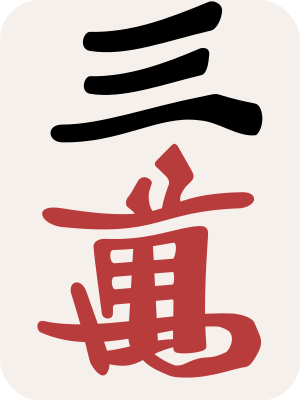
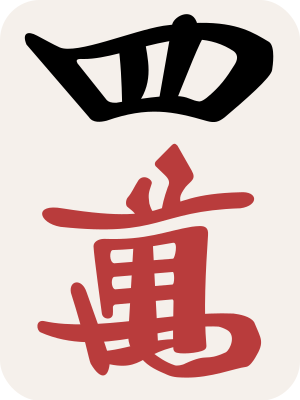
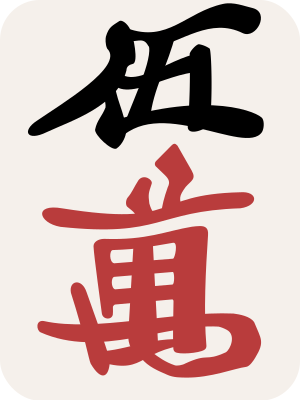
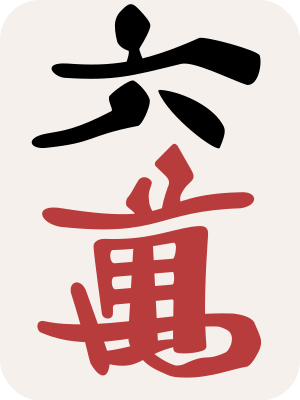
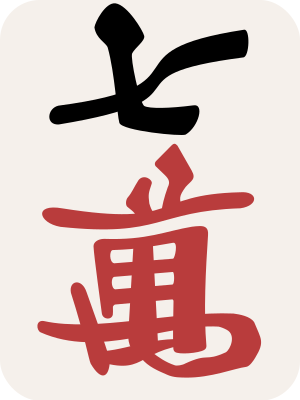
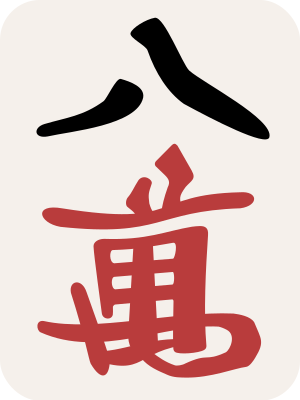
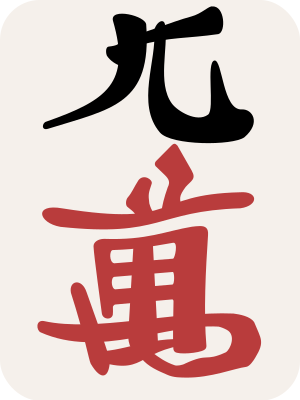
Reading craks. One, two and three are drawn with one, two and three horizontal strokes, which makes them easy. The others take a few games to learn, and some sets draw them in slightly different ways. Until you know them, use the corner numbers on American tiles, or tap each crak in the tile guide above to check.
The 1s and 9s of each suit are called terminals. Some scoring patterns in Chinese and Japanese mahjong count them specially.
The honor tiles
Honor tilesThe winds and dragons. They have no numbers, so they can form pungs and kongs but never runs.See the full glossary have no numbers, so they can form pungs and kongs but never runs.
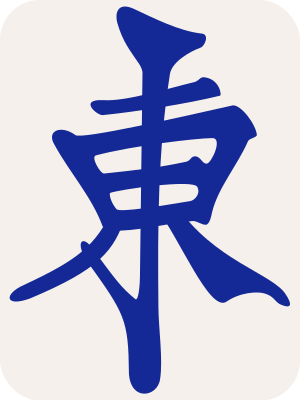
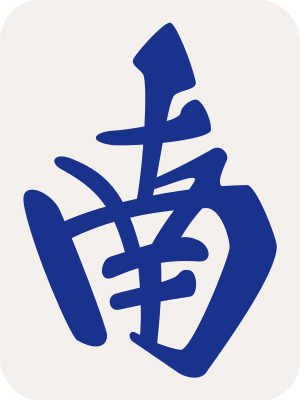
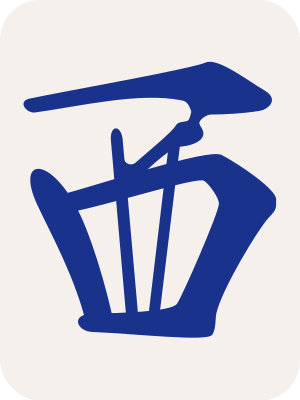
Winds. There are four winds, East, South, West and North, with four of each: 16 tiles. Each seat at the table is named after a wind too, and in Chinese and Japanese mahjong a pung of your own Seat windThe wind of your seat for the current hand: East for the dealer, then South, West and North going round the table to the right.See the full glossary scores extra. Chinese wind tiles carry the Chinese character for the direction; American tiles add a letter in the corner.

Dragons. There are three dragons, Red, Green and White, with four of each: 12 tiles. The Red Dragon shows a red character, and the Green Dragon a green one. The White Dragon is drawn differently from set to set: Japanese sets and many Chinese sets leave it blank, while American sets give it a frame, usually blue.
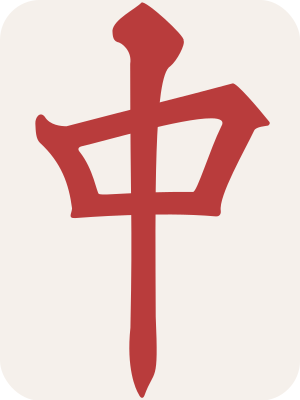
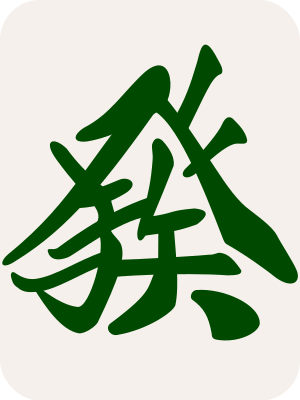

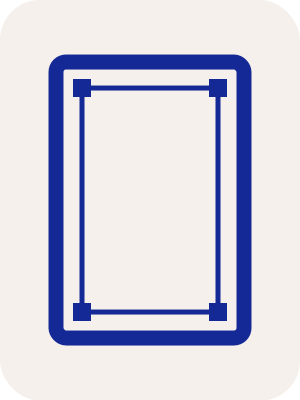
In American mahjong, each dragon goes with a suit: Red with craks, Green with bams, and White with dots. The White Dragon is nicknamed SoapThe American name for the White Dragon, which in American sets is drawn as a frame, often blue. On the card it can also stand for zero.See the full glossary and also stands for zero on the card.
Flowers, seasons and jokers
Chinese sets have eight bonus tiles: four FlowersBonus tiles. Chinese sets have four flowers and four seasons, which you set aside when drawn and replace. American sets have eight flowers, which are used in hands like any other tile.See the full glossary (plum, orchid, chrysanthemum and bamboo) and four seasons (spring, summer, autumn and winter). Each is numbered 1 to 4, matching the seats from East to North. When you draw one, you set it face up beside your hand and draw a replacement. If it matches your seat number, it scores a bonus.
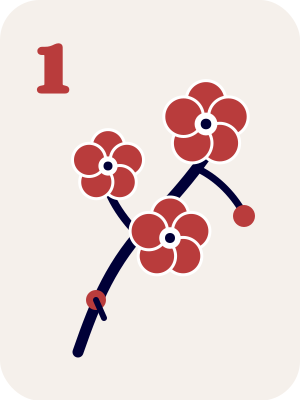
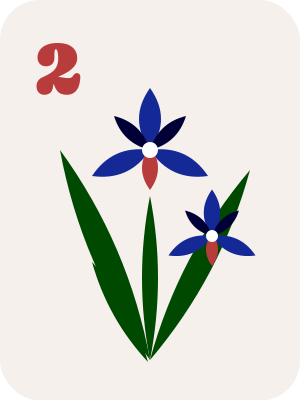
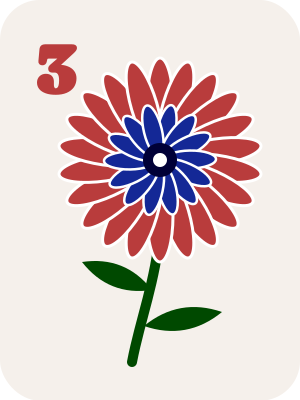
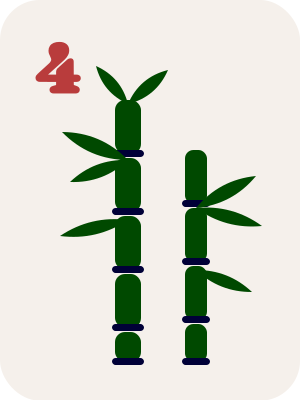


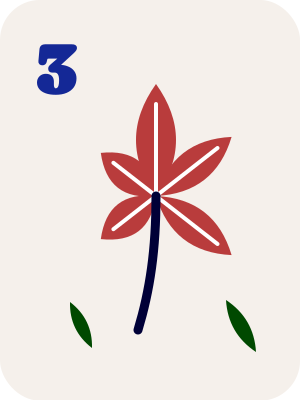
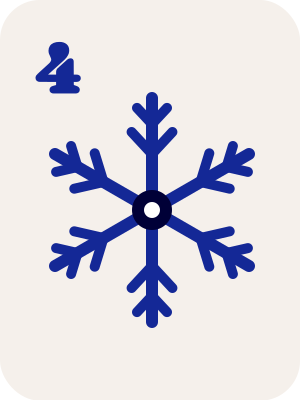
American sets also have eight flowers, but they work differently. The pictures and numbers don't matter: any flower counts as any other, and hands on the card use flowers like a little suit of their own.
Jokers appear only in American sets, eight of them. A JokerA wild tile in American mahjong. It can stand in for any tile in a group of three or more identical tiles, but never in a pair or as a single tile. Jokers can't be passed in the Charleston.See the full glossary can stand in for any tile in a group of three or more identical tiles, but never in a pair or as a single tile.

Japanese sets often include red fives: one 5 in each suit is printed in red and counts as a bonus tile (DoraBonus tiles in Japanese mahjong. Each dora in your winning hand adds value, but dora alone can't make a hand a winner.See the full glossary) in many rule sets. Some sets also have spare or blank tiles, which you take out before playing.

Tile names in Chinese and Japanese
You'll hear tiles called by their Chinese or Japanese names, especially in Hong Kong and riichi groups. Here are the common ones:
| Tile | English | Chinese (Mandarin) | Japanese |
|---|---|---|---|
| Dots | Dots, circles | Tong (also bing) | Pin |
| Bams | Bamboo, bams | Tiao (also suo) | Sou |
| Craks | Characters, craks | Wan | Man |
| East, South, West, North | Winds | Dong, Nan, Xi, Bei | Ton, Nan, Shaa, Pei |
| Red, Green, White | Dragons | Zhong, Fa, Bai | Chun, Hatsu, Haku |
How sets differ by style
| Tile | American | Chinese | Japanese |
|---|---|---|---|
| Suits (dots, bams, craks) | 108 | 108 | 108 (three are red fives) |
| Winds | 16 | 16 | 16 |
| Dragons | 12 | 12 | 12 |
| Flowers and seasons | 8 flowers | 4 flowers and 4 seasons | none |
| Jokers | 8 | none | none |
| Total | 152 | 144 | 136 |
A few other differences matter when you play:
- Corner numbers. American tiles usually print a small number or letter in a corner, which makes them easier to read. Chinese and Japanese tiles usually don't.
- Size. Japanese tiles are the smallest. American tiles are mid-sized, and many Chinese sets have larger tiles. Sizes vary a lot between makers, though.
- Racks. American sets come with racks that hold your tiles and the wall. Chinese and Japanese players often play without racks.
You can play Chinese or Japanese mahjong with an American set by leaving out the jokers and some flowers, but American mahjong needs the jokers, so a Chinese set won't do for it.
How many tiles are in a mahjong set?
It depends on the style:
- American mahjong: 152 tiles. Many boxed sets include a few extra blank tiles too, so you may count 160 or more.
- Chinese mahjong: 144 tiles, sometimes with spares.
- Japanese mahjong: 136 tiles in play. Sets often come with extra tiles such as red fives and blanks.
Every set has the same core of 136: the three suits, the winds and the dragons, four copies of each. The styles differ only in their extras.
Sorting your tiles
Arranging your hand the same way every time makes it much easier to see what you have. Most players sort like this:
- By suit: all your dots together, then bams, then craks.
- By number within each suit, from 1 to 9, so runs and gaps stand out.
- Honors at one end, with winds and dragons kept apart.
- Flowers and jokers in their own spot, if your style uses them.
Leave a small gap between groups that already belong together, such as a pung or a run. When a new tile arrives, slot it into place before you decide what to throw away. You'll make fewer mistakes, and you'll see a ready hand the moment you have one.
Choosing tiles to buy
The most important question is which style your group plays. If you're joining an American group, you need an American set with jokers and racks. If your family plays Chinese or Hong Kong mahjong, a Chinese set is right. Japanese players usually want a smaller set with red fives.
After that, look at:
- Tile size and weight. Larger, heavier tiles are easier to see and stand up well; smaller tiles are easier to carry.
- Readable faces. Clear corner numbers make American sets much easier for beginners.
- What's in the case. Racks, pushers, dice and a betting or scoring kit often come with American sets.
Our guide to mahjong sets compares the options in more detail.
FAQ
What do the numbers on mahjong tiles mean?
On suit tiles, the number is the tile's rank, from 1 to 9. On American tiles, small corner marks also show winds as N, E, S and W. Flowers and seasons on Chinese sets are numbered 1 to 4 to match the seats East to North.
Why is there a bird on a mahjong tile?
The bird is the 1 of bamboos. Instead of drawing a single bamboo stick, most sets draw a bird, often a sparrow or a peacock.
Why is one mahjong tile blank?
In Japanese and many Chinese sets, the White Dragon is a blank tile. Some sets also include spare blank tiles to replace lost ones; take those out before you play.
How do I tell the dragons apart?
By color. The Red Dragon has a red character, the Green Dragon a green one, and the White Dragon is either blank or a framed rectangle. In American sets, small corner letters often help too.
How many tiles does each player get?
Thirteen, except the dealer (East), who starts with 14 and discards first.
Can I use a Chinese set for American mahjong?
Not on its own, because American mahjong needs eight jokers and eight flowers. Some players add sticker jokers to spare tiles, but most groups expect a proper American set.
Ready to play? Start with how to play mahjong, keep the cheat sheet handy, or browse the beginner's hub.