Mahjong Winning Hands Explained
A winning mahjong hand has 14 tiles. In Chinese and Japanese mahjong, those tiles almost always form four sets and a pair, and special patterns within that shape earn extra points. In American mahjong, the winning hands are whatever is printed on that year's card, built from pairs, pungs, kongs and larger groups.
This page shows how winning hands are put together in each style, with pictures of the common patterns, so you know what to aim for.
On this page
The basic shape: four sets and a pair
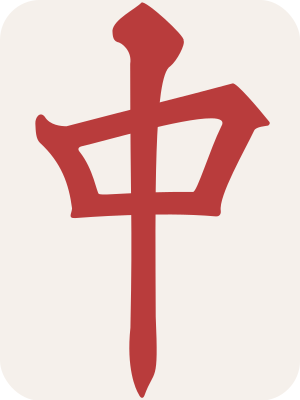
In Chinese and Japanese mahjong, a standard winning hand is four sets and one pair. Each set is a PungThree identical tiles, such as three 7 Bams or three Red Dragons. You can call a pung from any player's discard.See the full glossary (three identical tiles), a KongFour identical tiles. In Chinese and Japanese mahjong, a kong counts as one set and you draw a replacement tile after making it.See the full glossary (four, counting as one set) or a ChowThree tiles in a row in the same suit, such as 4-5-6 of dots. Used in Chinese and Japanese mahjong, not in American mahjong. You can call a chow only from the player on your left.See the full glossary (three in a row in one suit).
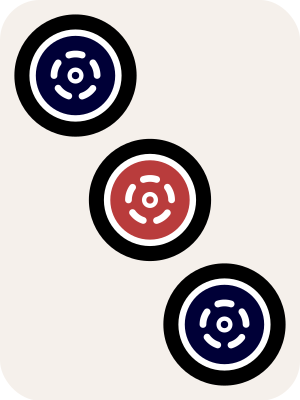
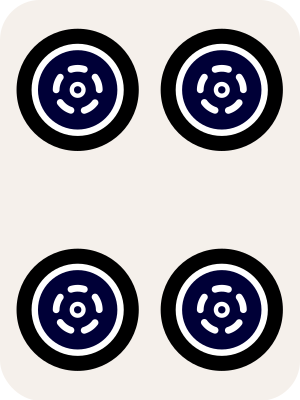
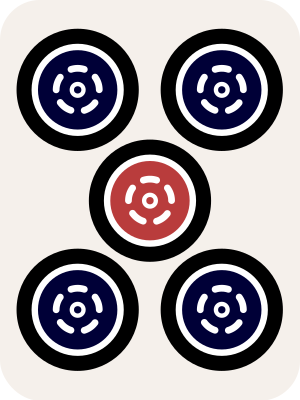
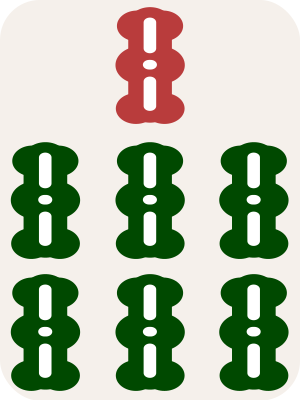
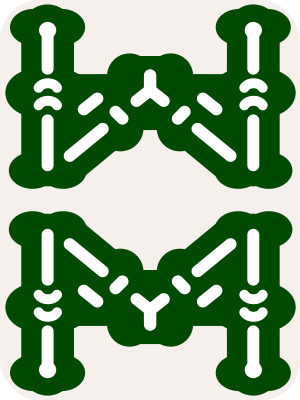
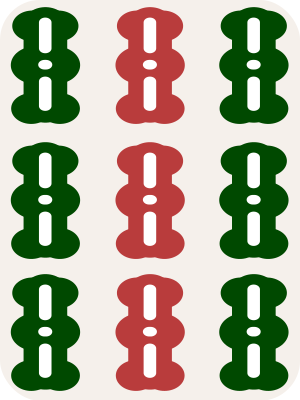
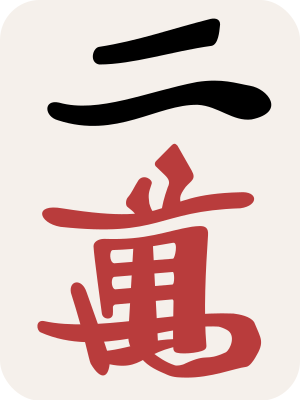
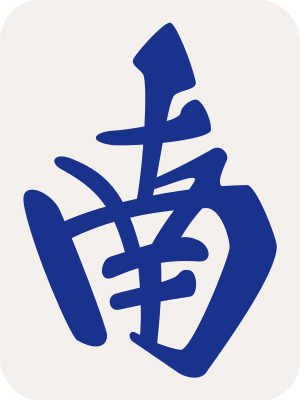
Any combination works for a basic win. But in most scoring systems a plain hand is worth very little, and some groups require a minimum score to win at all. So players aim for patterns that add value: all one suit, all pungs, sets of dragons or winds.
Every hand also has a "waiting" moment before it wins. A hand one tile short is ReadyOne tile away from winning.See the full glossary, and the more tiles it can win on, the better its chances.
Chinese mahjong patterns
These are the patterns most Hong Kong groups score. Values are in FaanThe scoring unit in Hong Kong mahjong. Each feature of a winning hand is worth a number of faan, and the total sets how much the hand is paid.See the full glossary and vary a little between groups.
Common hand (all chows), 1 faan. Four chows and a pair. Easy to build, because chows come together quickly.

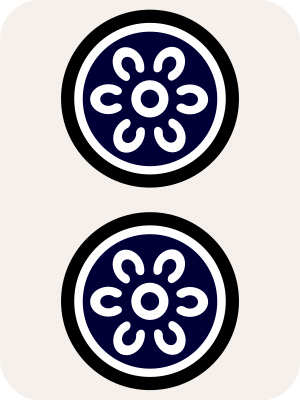
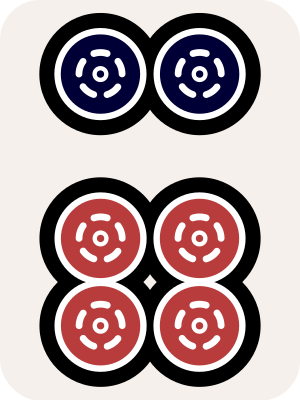
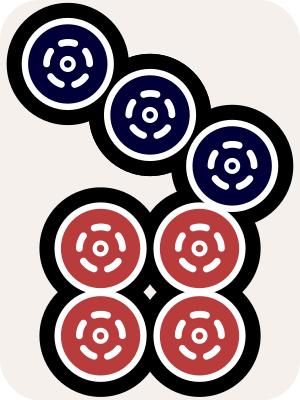
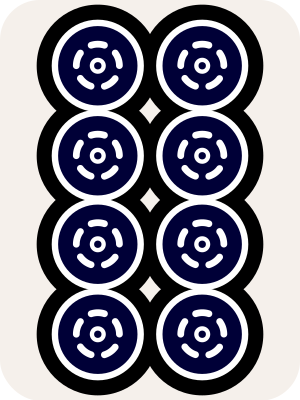
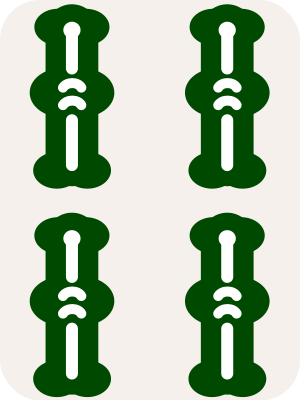
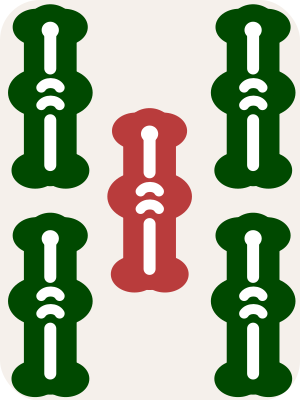
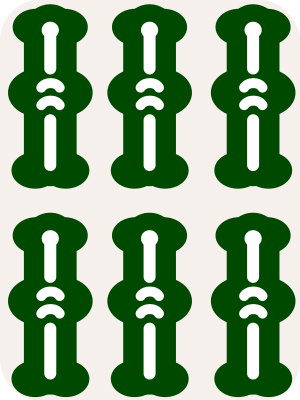
All pungs, 3 faan. Four pungs (or kongs) and a pair, with no chows.
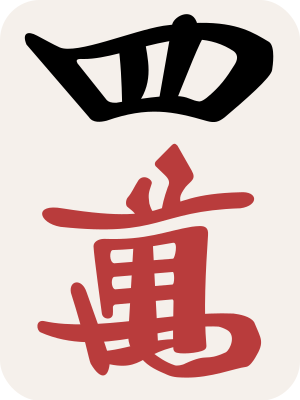
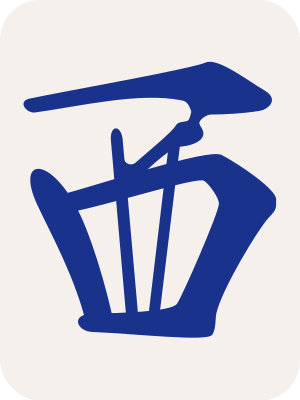
Half flush, 3 faan. One suit plus honors (winds and dragons).
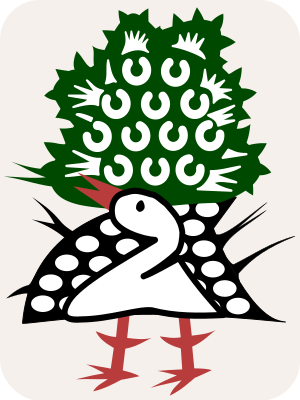
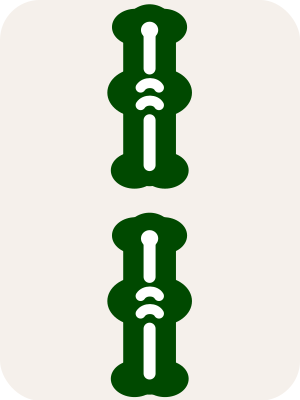
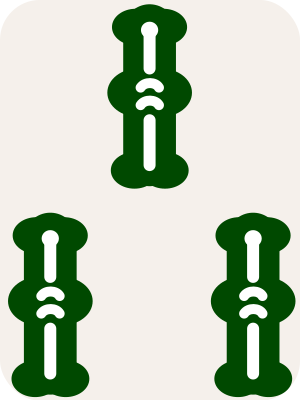
Full flush, 7 faan. Every tile in one suit, with no honors at all.
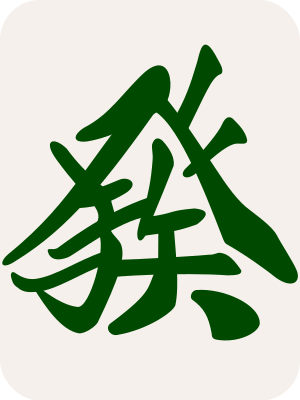
Dragon hands. Small Three Dragons is two dragon pungs plus a pair of the third dragon. Great Dragons is a pung of all three. Both score highly, with Great Dragons near the top.

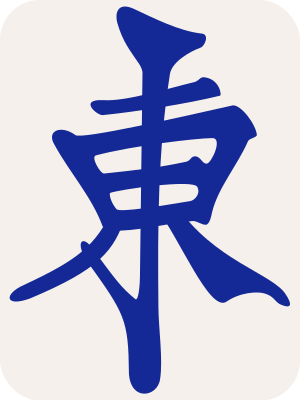
Wind hands. Small Four Winds is three wind pungs plus a pair of the fourth wind. Big Four Winds is a pung of every wind, and it is one of the limit hands.
Limit hands. A few hands are worth the maximum score your group allows, often 10 or 13 faan:
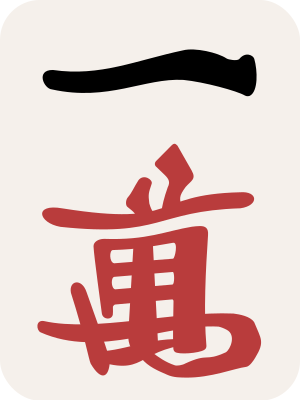
- Thirteen Orphans: one of each 1 and 9, every wind and every dragon, plus one extra copy of any of them.
- Nine Gates: in one suit, three 1s, the 2 to 8, three 9s, plus any one more tile of that suit.
- All Honors: nothing but winds and dragons.
- All Kongs: four kongs and a pair.
- Big Four Winds: pungs of all four winds.
Japanese mahjong patterns (yaku)
In Japanese riichi mahjong, a winning hand must contain at least one YakuA scoring pattern in Japanese mahjong. Your winning hand must contain at least one yaku, or it can't win.See the full glossary, a scoring pattern. A hand with four sets and a pair but no yaku can't win. Each yaku is worth one or more han, and some only count if you haven't called any tiles (a closed hand).
The yaku beginners use most:
| Yaku | What it needs | Han |
|---|---|---|
| Riichi | Declare that your closed hand is ready | 1 (closed only) |
| Fully concealed self-draw | Win on your own draw with a closed hand | 1 (closed only) |
| All simples (tanyao) | Only tiles 2 to 8: no 1s, 9s or honors | 1 |
| Value honors (yakuhai) | A pung of dragons, your seat wind or the round wind | 1 each |
| Pinfu | Closed hand of four chows, a pair that scores nothing, and a two-sided wait | 1 (closed only) |
| Pure double chow (iipeikou) | Two identical chows | 1 (closed only) |
| Seven pairs (chiitoitsu) | Seven different pairs | 2 (closed only) |
| All pungs (toitoi) | Four pungs or kongs and a pair | 2 |
| Half flush (honitsu) | One suit plus honors | 3 closed, 2 open |
The safest yaku for a beginner is riichi: keep your hand closed, get ready, and declare. Value honors are the easiest yaku to get while calling tiles, because a dragon pung counts whether it's open or closed.
American mahjong hands
American hands work differently. You don't build any four sets and a pair. You build one specific hand from The cardThe list of winning hands for American mahjong, published each year by the National Mah Jongg League. Every player needs the current year's card.See the full glossary, the list published each year by the National Mah Jongg League. This page doesn't show any of those hands, because they belong to the League and change every year.
What every American hand has in common:
- 14 tiles, exactly as printed. The card shows each tile in the hand.
- Groups of different sizes: single tiles, pairs, pungs (3), kongs (4), QuintFive identical tiles in American mahjong. Because a set has only four of each tile, a quint always needs at least one joker (or flowers).See the full glossary (5) and sextets (6).
- Exposed or concealed. An X means you may call discards to build the hand's groups; a C means you build it yourself and can only call the winning tile.
- Jokers in groups of three or more only. A JokerA wild tile in American mahjong. It can stand in for any tile in a group of three or more identical tiles, but never in a pair or as a single tile. Jokers can't be passed in the Charleston.See the full glossary can never be a single tile or part of a pair, so hands made only of singles and pairs can't use jokers at all.
- Sections built on a theme, such as even numbers, odd numbers, numbers in a row, winds and dragons, or the digits of the current year.


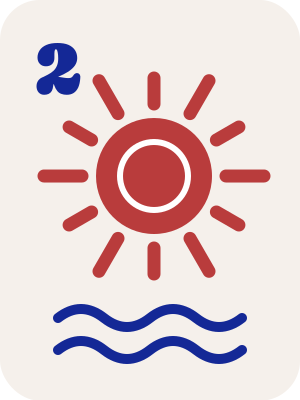
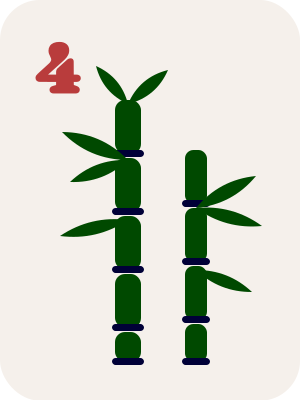
To learn how to read the card and choose a hand after the CharlestonThe tile swap at the start of an American mahjong hand. Everyone passes three unwanted tiles right, then across, then left, and may agree to a second round and a final courtesy pass.See the full glossary, see how to play American mahjong and the 2026 mahjong card.
Scoring a winning hand: an example
Here's how one Chinese hand adds up under common Hong Kong scoring. You hold a half flush in dots, with a pung of Red Dragons that you called earlier, and you win by drawing the last tile yourself. You have no flowers or seasons.
| What the hand has | Faan |
|---|---|
| Half flush (dots and honors only) | 3 |
| Pung of Red Dragons | 1 |
| Self-drawn winning tile | 1 |
| No flowers or seasons | 1 |
| Total | 6 |
The pair of North Winds scores nothing on its own: only pungs and kongs of winds count. If North were your seat wind and you had a third North, it would add another faan.
That's well over a 3-faan minimum. The same tiles arranged as a plain hand with no flush and no dragons might score only 1 or 2, which is why players chase patterns.
Before you call mahjong
A wrong call can cost you, so check these first:
- Count to 14. Include every exposed set; a kong adds one extra tile.
- Find the pair. In Chinese and Japanese mahjong you need exactly one, unless you're playing a special hand.
- Check the minimum. Does the hand reach your group's minimum faan, or have at least one yaku in Japanese mahjong?
- Match the card exactly. In American mahjong, check suits, colors and the X or C before you show your tiles.
Choosing which hand to aim for
- Look at what you already have. Pairs and pungs point toward all-pung hands; several tiles in a row toward chows; lots of one suit toward a flush.
- Count honors. A pair of dragons or of your seat wind is a head start on value.
- Stay flexible early. Keep two possible hands in mind until the tiles choose for you.
- Know your group's minimum. If you need 3 faan, plan where they'll come from before you start calling.
For more on decisions during play, read our mahjong strategy tips.
FAQ
What is a winning hand in mahjong?
In Chinese and Japanese mahjong, 14 tiles arranged as four sets and a pair (plus a few special hands, such as seven pairs or Thirteen Orphans). In American mahjong, 14 tiles that exactly match a hand on the current year's card.
What is the highest hand in mahjong?
In Chinese mahjong, the limit hands, such as Thirteen Orphans, Nine Gates and Big Four Winds, all score the maximum. In Japanese mahjong, the equivalent hands are called yakuman. In American mahjong, the highest-value hands are printed on the card each year.
Can you win mahjong with seven pairs?
In Japanese mahjong and the Chinese Official rules, yes. In Hong Kong mahjong it depends on your group's house rules. In American mahjong, only if that year's card includes such a hand.
What is the easiest winning hand in mahjong?
In Chinese mahjong, an all-chows hand comes together fastest, because runs can be built in many ways. In Japanese mahjong, a closed hand with riichi is the most reliable. In American mahjong, the simpler exposed hands on the card, usually the lowest-value ones, are easiest for beginners.
Do you need a pair to win mahjong?
In Chinese and Japanese mahjong, a standard winning hand always has exactly one pair. In American mahjong, it depends on the hand on the card.
See every tile in the tile guide, keep the cheat sheet handy, or go back to the beginner's hub.