Cribbage Scoring: How to Count a Hand (With Calculator)
To count a cribbage hand, you take your four cards plus the starter card and add up five kinds of combination: fifteens (2 each), pairs (2 each), runs (1 per card), a flush (4 or 5) and his nobs (1). Count them in that order every time and you won't miss points. The calculator below checks any hand for you.
This page is all about the count: the order hands are scored in, each combination explained with cards, the points you peg during the play, and worked examples from a zero hand up to the perfect 29. If you're new to the game itself, start with how to play cribbage.
On this page
The goal of counting
In cribbage you score in two places. During the play (also called pegging), you score as you lay cards down one at a time. After the play comes the show, when each hand is picked up again and counted. Most of your points in a typical game come from the show, so counting quickly and completely is worth learning well.
When you count a hand, you are finding every combination the five cards make: your four cards and the starter, which is the card turned face up from the deck before the play. A single card can belong to many combinations at once. A five might be part of three fifteens, a pair and a run, and it scores in all of them.
The aim is to find each one exactly once. Counting in a fixed order, and saying the running total out loud, is how players keep track.
What you need
- Your four cards and the starter. Lay them out face up so your opponent can follow along.
- The card values for fifteens. Aces count 1, number cards count their number, and jacks, queens and kings all count 10.
- The rank order for runs. Ace is always low, then 2 through 10, jack, queen, king. A queen, king and ace is not a run, and runs don't wrap around.
- A board or score sheet to peg the total. Our printable score sheets include one for cribbage.
The order of counting
Every deal, the show goes in the same order:
- The non-dealer's hand is counted first.
- The dealer's hand is counted second.
- The crib, the extra hand made from the two cards each player laid away, is counted last and scores for the dealer.
All three use the same starter card. This order matters at the end of a game. The non-dealer counts first, so if both players are close to 121, the non-dealer can reach it and win before the dealer counts anything.
Within one hand, most players count in this order: fifteens, then pairs, then runs, then a flush, then his nobs. You say the running total as you go: "fifteen two, fifteen four, a pair is six, and a run of three is nine."
Counting a hand step by step
Here is one hand, counted the way you'd count it at the table: the 6, 7 and 8 of clubs and the jack of diamonds, with the 8 of diamonds as the starter.
Lay out your hand and the starter
Spread your four cards face up and keep the starter slightly apart so you remember which card it is. It matters for the flush and for his nobs.
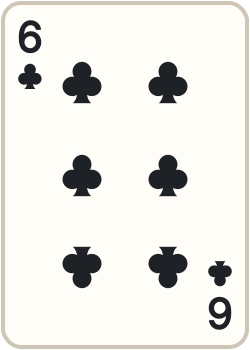
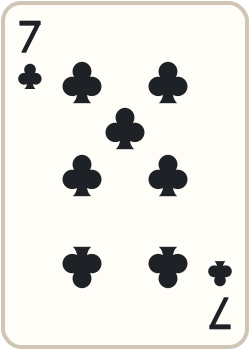
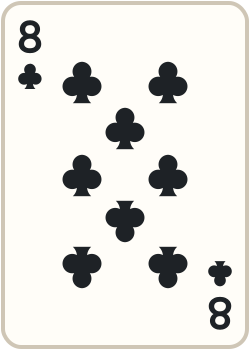
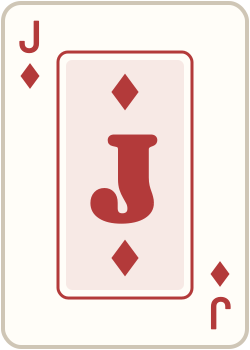
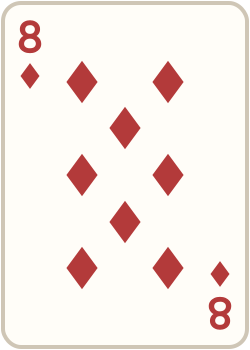
Four cards in hand, with the starter set to one side. Find every fifteen
Look for any group of two or more cards whose values add up to 15. The 7 and the 8 of clubs make one. The 7 and the 8 of diamonds make another. The jack counts 10, but nothing here adds 5 to it. That's "fifteen two, fifteen four".
7 + 8 = 15, and there are two eights: two fifteens. Count the pairs
Every two cards of the same rank make a pair worth 2. You have two eights, so that's one pair: "and a pair is six".
Two eights make one pair: 2 points. Count the runs
A run is three or more cards in rank order, worth 1 point per card. The 6, 7 and 8 make a run of three. Because you have two eights, you can make it two different ways, and each one counts. That's a double run: 6 points, bringing you to 12.
6-7-8 twice, once with each eight: two runs of three. Check for a flush
A flush needs all four cards in your hand to be one suit. Three clubs and a diamond isn't enough, so there's nothing here.
Three clubs and a diamond: no flush. Look for his nobs
If you hold the jack of the same suit as the starter, you score 1 for his nobs. Your jack is a diamond and so is the starter: "and one for nobs is 13".
The jack in your hand matches the starter's suit: 1 point. Peg the total
Move your back peg 13 holes past your front peg. The gap between your pegs now shows the 13 you just scored, so your opponent can check your count.
Scoring
Try any hand in the counter, then read on for how each combination works.
Your cards
Pick cards
29 points
- Fifteens
- 16
- Pairs
- 12
- Runs
- 0
- Flush
- 0
- His nobs
- 1
Every combination
- Fifteen: 5♣ + 5♦ + 5♥ (2)
- Fifteen: 5♣ + J♠ (2)
- Fifteen: 5♦ + J♠ (2)
- Fifteen: 5♥ + J♠ (2)
- Fifteen: 5♣ + 5♦ + 5♠ (2)
- Fifteen: 5♣ + 5♥ + 5♠ (2)
- Fifteen: 5♦ + 5♥ + 5♠ (2)
- Fifteen: J♠ + 5♠ (2)
- Pair: 5♣ and 5♦ (2)
- Pair: 5♣ and 5♥ (2)
- Pair: 5♣ and 5♠ (2)
- Pair: 5♦ and 5♥ (2)
- Pair: 5♦ and 5♠ (2)
- Pair: 5♥ and 5♠ (2)
- His nobs: J♠ matches the starter's suit (1)
Every combination below is counted from the five cards: your four plus the starter. The crib is counted the same way, with one difference for flushes.
Fifteens: 2 points each
Every different group of cards that adds up to exactly 15 scores 2. Groups can be any size, from two cards (a 7 and an 8) up to all five (A-2-3-4-5). A card can be used in as many different fifteens as it fits.
The ten-value cards make fifteens easy to find. There are 16 of them in the deck (every 10, jack, queen and king), and any one of them makes 15 with a five.
Pairs: 2 points each
Each two cards of the same rank make a pair worth 2. Three of a kind contains three different pairs, so it's worth 6. Four of a kind contains six pairs, worth 12. Only matching ranks count: a jack and a queen are both worth 10, but they aren't a pair.
Runs: 1 point per card
Three or more cards in consecutive rank make a run, worth 1 point for each card in it. Suits don't matter. Only the longest run counts: 5-6-7-8 is a run of four for 4, not a run of four plus two runs of three.
When a rank appears twice inside a run, you can build the run more than one way, and each way scores:
| Pattern | Example | Run points | Plus pairs | Total for the pattern |
|---|---|---|---|---|
| Double run of three | 6-7-7-8 | 3 + 3 | 2 | 8 |
| Double run of four | 3-4-5-5-6 | 4 + 4 | 2 | 10 |
| Triple run | 6-6-6-7-8 | 3 + 3 + 3 | 6 | 15 |
| Double double run | 7-7-8-8-9 | 3 + 3 + 3 + 3 | 4 | 16 |
These totals don't include any fifteens the cards also make.
Flush: 4 or 5 points
If all four cards in your hand are the same suit, you score 4. If the starter is that suit too, you score 5. Four of the same suit using the starter (three in hand plus the starter) doesn't count.
The crib is stricter. A crib only scores a flush when all five cards, the four crib cards and the starter, are one suit. Then it's worth 5. Four crib cards of one suit with a different starter score nothing for the flush.
His nobs: 1 point
If you hold the jack of the same suit as the starter, in your hand or in the crib, you score 1. The jack has to be one of your four cards: a jack turned as the starter isn't his nobs.
Pegging points during the play
During the play you and your opponent take turns laying cards and saying the running count, which can't go above 31. You peg these as they happen:
| Combination in the play | Points |
|---|---|
| Making the count exactly 15 | 2 |
| Making the count exactly 31 | 2 |
| Pair: same rank as the card just played | 2 |
| Three of a kind in a row | 6 |
| Four of a kind in a row | 12 |
| Run of three or more among the latest cards, in any order | 1 per card |
| Go, or the last card of the play | 1 |
A "go" is when the next player can't play without going over 31. The player who laid the last card scores 1. Hitting exactly 31 scores 2 in total, not 2 plus 1. There are no flushes in the play: cards of one suit in a row score nothing extra.
His heels: 2 points to the dealer
If the starter turned up is a jack, the dealer pegs 2 straight away, before the play begins. It's scored once, at the cut, and doesn't count again in the show.
Impossible totals
The highest possible hand is 29. Some totals below that can't be made by any hand: 19, 25, 26 and 27. That's why many players say "nineteen" as a joke when they have a hand worth nothing.
Worked examples
Each total here is checked against the same scoring code the counter uses.
The 29 hand: three fives and the jack, with the fourth five turned
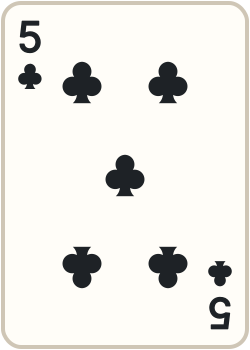
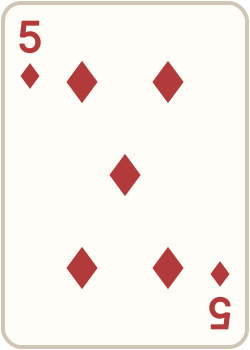
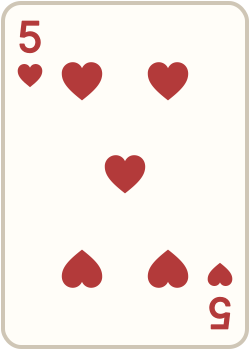
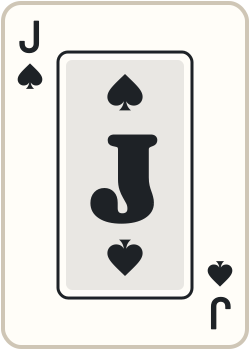
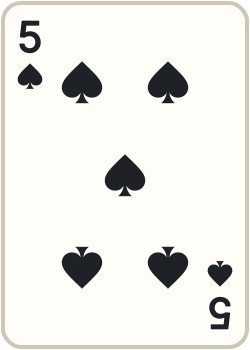
Fifteens. Each five makes 15 with the jack: four fives, so four fifteens. Any three of the four fives also make 15, and there are four ways to choose three of them. That's eight fifteens, for 16 points.
Pairs. Four fives contain six different pairs: 12 points, for 28.
Runs and flush. None.
His nobs. The jack of spades matches the starter, the 5 of spades: 1 point. The total is 29.
A double run: 7-8-8-9
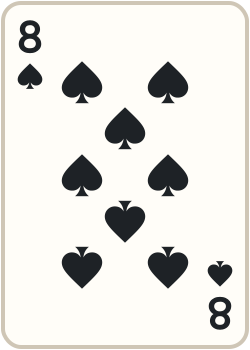
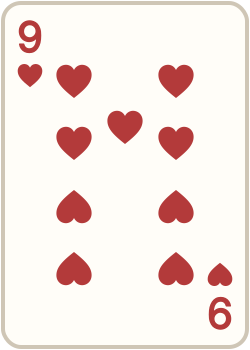
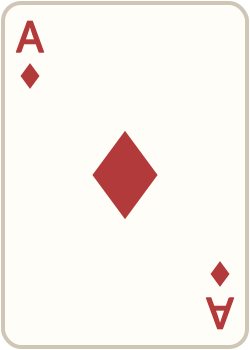
Fifteens. The 7 makes 15 with each 8: 4 points.
Pairs. Two eights: 2 points, for 6.
Runs. 7-8-9 can be made with either eight, so you have two runs of three: 6 points, for 12. The ace doesn't connect to anything.
No flush and no jack. The total is 12. Players often count a double run of three as "8" in one go: two runs and the pair.
A double run of four: 3-4-5-5-6
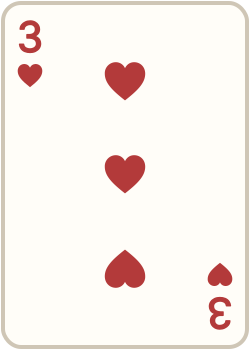
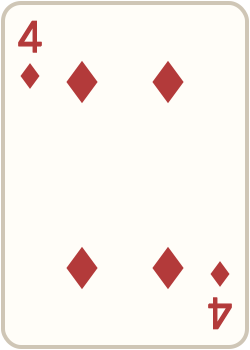
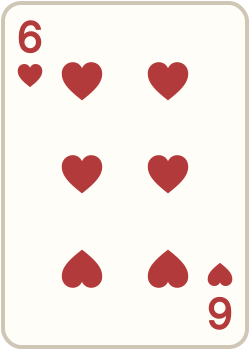
Fifteens. 4 + 5 + 6 makes 15, once with each five: 4 points.
Pairs. The two fives: 2 points, for 6.
Runs. 3-4-5-6 is a run of four, and you can build it with either five: 8 points, for 14. You don't also count the shorter runs inside it.
The total is 14.
A crib flush: five hearts
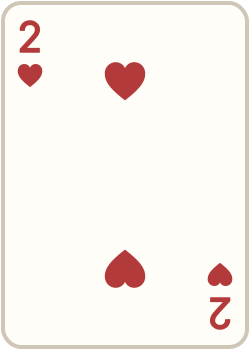
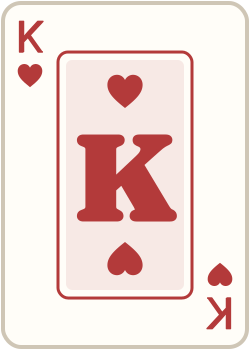
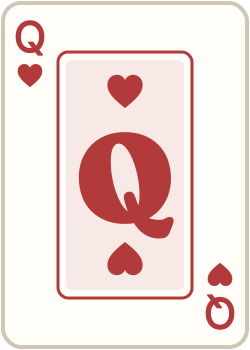
Fifteens. 6 + 9 makes 15: 2 points. Nothing else adds to 15.
Flush. All five cards are hearts, so the crib scores a flush of 5. The total is 7.
The same crib with a club turned: no flush
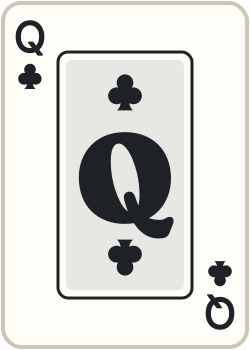
Fifteens. 6 + 9 is still 15: 2 points.
Flush. In the crib, four cards of one suit aren't enough. The starter has to match too, and it doesn't, so the flush scores nothing. The total is 2. If these four cards were your hand instead of the crib, the four-card flush would count for 4, making 6.
A zero hand: 2, 4, 6, 8 and a king
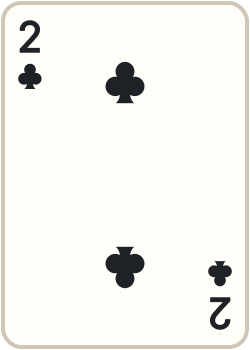
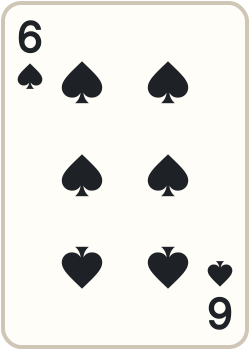
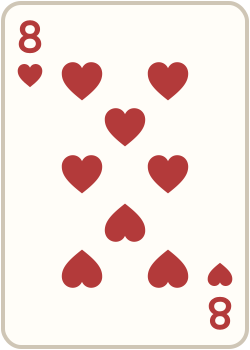
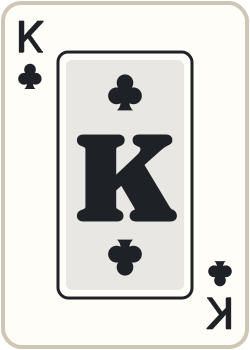
Fifteens. Try every group: 2 + 4 + 8 is 14, 2 + 4 + 6 is 12, 6 + 8 is 14, and the king needs a 5 to make 15. Nothing works.
Pairs, runs, flush and nobs. No two cards share a rank, the cards skip every other rank so there's no run, the suits are all different, and there's no jack.
The total is 0: "nineteen", as players say.
House rules and variants
Strategy tips
- Always count in the same order. Fifteens, pairs, runs, flush, nobs. A fixed routine is the best way to avoid missing points, and it protects you if your group plays muggins.
- Count fifteens by card size. Start with the ten-cards and look for fives. Then look for pairs of cards like 7 and 8 or 6 and 9. Finish with groups of three or more, such as 4-5-6 or 2-3-10.
- Learn the common patterns as single numbers. A double run of three is 8, a double run of four is 10, a triple run is 15 and a double double run is 16, before fifteens. Saying "and a double run is 8" is faster and safer than counting each run.
- Check the starter for nobs. It's the point players forget most. Any time you hold a jack, glance at the starter's suit.
- Remember the crib flush rule. When you lay away suited cards to your own crib, four of a suit only pays if the starter matches.
- Use the counter to check yourself. If a total seems off, enter the cards in the cribbage hand counter and compare its list of combinations with yours.
FAQ
How do you count points in cribbage?
Use your four cards plus the starter. Score 2 for every combination adding to 15, 2 for every pair, 1 per card for every run of three or more, 4 or 5 for a flush, and 1 for holding the jack of the starter's suit.
What is the highest score in cribbage?
29 points, for three fives and the jack in hand with the fourth five, of the jack's suit, as the starter.
Does a flush count in the crib?
Only if all five cards, the four crib cards and the starter, are one suit. Then it's worth 5. Four cards of one suit in the crib score nothing for the flush.
Is 31 worth 2 or 3 points?
2 points in total. Hitting 31 doesn't also earn the 1 point for the go or last card.
Why do cribbage players say nineteen?
No hand can score exactly 19, so "nineteen" became a joking way to say a hand is worth nothing. Totals of 25, 26 and 27 are impossible too.
What's the difference between his nobs and his heels?
His nobs is 1 point for holding the jack of the starter's suit in your hand or crib. His heels is 2 points to the dealer when the starter itself is a jack.
Learn the rest of the game in how to play cribbage, jump back to the scoring rules, or find another card game for two in our gin rummy rules. For more players, learn how to play hearts, or see all our tools.