Mahjong Strategy: Tips Every Beginner Should Know
Good mahjong strategy comes down to two questions you ask every turn: which tile brings me closest to a winning hand, and which tile is least likely to hand someone else the win? Early in a hand you play for speed, keeping tiles that connect and letting go of loners. Later, as other players get close, you start watching what you throw away.
These tips work in every style of mahjong, with notes at the end for American, Chinese and Japanese play. If you're still learning the rules, start with how to play mahjong.
On this page
Offense: building your hand quickly
Keep tiles that work together. A tile is useful when it can become part of a set in more than one way. A 5 can join a 3-4, a 4-6 or a 6-7, or pair up with another 5. A lone 1 can only join a 2-3 or another 1. In styles with runs, middle tiles are more flexible than end tiles, and suit tiles are more flexible than honors.
Throw away loners first. On your first few turns, let go of tiles that don't touch anything else in your hand. A good default order:
- Single winds and dragons that score nothing for you.
- Single 1s and 9s.
- Single 2s and 8s.
- Isolated middle tiles.


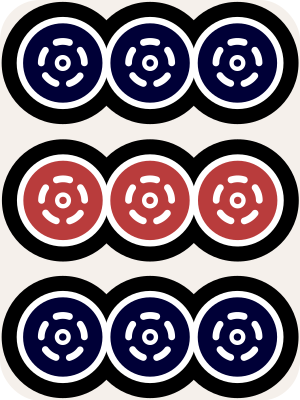
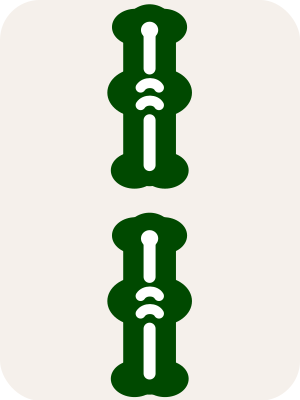
The exception is an honor that scores for you, such as your own seat wind or a dragon in Chinese and Japanese mahjong. Keep a pair of those longer, since a third copy turns them into points.
Prefer waits with more chances. When you have two tiles that need a third, the shape matters:
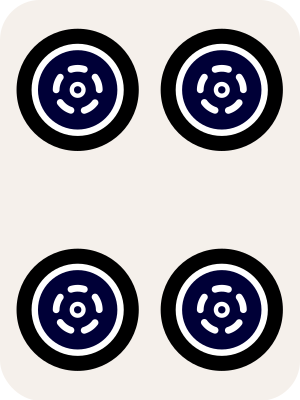
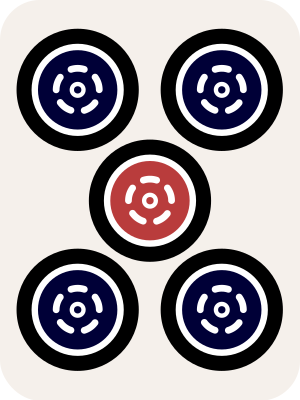


The open 4-5 can be finished by either of two tiles, up to eight copies in all. The edge 1-2 and the gapped 4-6 each have only one useful tile, four copies at most. When you have to break up one of these shapes, keep the open one.
Don't collect too many pairs. You need exactly one pair for a standard winning hand. Two or three pairs are fine early, because any of them could become a pung. Five pairs, though, usually means a slow hand, unless you're aiming for a seven-pairs hand that your style allows.
Count what's left. Before you wait on a tile, look at the table. If two copies of it are already in the discards and a third is in someone's exposed set, only one is left. Waiting on a dead tile is the most common way a ready hand goes nowhere.
Defense: not feeding other players
Every discard is a tile someone else might need. Early in the hand that rarely matters, because no one is close to winning. Later, it decides games.
Watch for players who are close. Signs that a player is near the end:
- They have exposed two or three sets.
- They have stopped discarding the kind of tile they were throwing earlier.
- They take a long look at each discard, then pass.
- In Japanese mahjong, they declare RiichiIn Japanese mahjong, declaring that your concealed hand is one tile from winning, with a small bet. After that you can't change your hand.See the full glossary.
Discard what they've discarded. A tile a player has already thrown away is less likely to be one they need. In Japanese mahjong this is a strong rule: a player can't win on a discard of any tile they themselves have discarded, so their own discards are completely safe against them. In other styles it's a good guide rather than a guarantee.
Honors with three showing are safer. If three copies of a wind or dragon are already visible, nobody can make a pung of it. The last copy can still complete a pair, so it isn't perfectly safe, but it's far safer than a tile no one has seen.
Know when to give up. If your hand is far from ready and another player is clearly close, it's often better to stop chasing your own win and discard only safe tiles. Losing a little less is worth more than a long-shot win.
Reading the discards
The discard pile tells a story about every player's hand.
Early discards show what a player doesn't want. If someone throws away bams on their first few turns, they probably aren't building a bam hand. Tiles near those discards are also a little safer to throw toward them later.
Missing suits can mean a flush. If a player has discarded plenty of dots and craks but never a bam, they may be collecting bams for a flush. Hold your bams a little longer if they're close to winning.
Exposed sets narrow things down. A player with an exposed pung of dragons and two exposed bam runs needs bams or honors to finish. Look at what's still possible and avoid feeding it.
Watch what gets called. When someone calls a discard, you learn exactly which tile they needed, and their exposed set shows part of their plan. A player who calls a pung of dragons early is likely chasing points; one who calls several runs is likely going for speed.
Choosing a hand early
Strong players decide early, but not too early. After the deal, take a moment before your first discard:
- Count your pairs and near-sets. These tell you how fast your hand can be.
- Look for a suit you're heavy in. Five or six tiles of one suit can grow into a flush, which scores well in Chinese and Japanese mahjong.
- Check your scoring tiles. Dragon or seat-wind pairs are worth keeping.
- Pick a direction, and keep a backup. Aim for one kind of hand, but don't throw away tiles that keep a second option open until you have to.
Change course when the tiles push you. If you've been building a bam flush and three bams you need show up in the discards, switch to a faster hand rather than waiting for tiles that aren't coming.
Style-specific tips
American mahjong. Your hand has to match one on the card, so the first decision is which hands your tiles fit after the CharlestonThe tile swap at the start of an American mahjong hand. Everyone passes three unwanted tiles right, then across, then left, and may agree to a second round and a final courtesy pass.See the full glossary. Narrow it to two or three hands and pass tiles that help none of them. Keep your JokerA wild tile in American mahjong. It can stand in for any tile in a group of three or more identical tiles, but never in a pair or as a single tile. Jokers can't be passed in the Charleston.See the full glossary for groups of three or more, and check every exposure on the table each turn for a Joker exchangeOn your turn, swapping a real tile from your hand for a joker in any player's exposure, when your tile is the one the joker stands for.See the full glossary. Late in the hand, look at players with several exposures and avoid discarding what their hand needs. See how to play American mahjong.
Chinese (Hong Kong) mahjong. If your group plays with a minimum FaanThe scoring unit in Hong Kong mahjong. Each feature of a winning hand is worth a number of faan, and the total sets how much the hand is paid.See the full glossary, a fast hand that scores nothing can't win, so build in value early: a dragon pung, your seat wind, or a half flush. Calling sets makes you faster but shows your plan, and staying concealed can earn a bonus. See how to play Chinese mahjong.
Japanese (riichi) mahjong. Every winning hand needs at least one YakuA scoring pattern in Japanese mahjong. Your winning hand must contain at least one yaku, or it can't win.See the full glossary, so know which one you're aiming for before you call any tiles: calling can cost you yaku that only count when the hand is concealed. Declare riichi when you have a good wait, and use other players' discards as safe tiles when someone else declares. Count your DoraBonus tiles in Japanese mahjong. Each dora in your winning hand adds value, but dora alone can't make a hand a winner.See the full glossary: they add value but never make a hand a winner on their own.
Practice drills
- Play open hands. Deal four hands face up and talk through each discard with your group. You'll learn faster from discussing choices than from playing silently.
- Count waits. When you're ready, say out loud which tiles you're waiting on and how many are left. You'll start noticing dead waits automatically.
- Review one hand. After a game, rebuild one hand you lost and look for the turn where a different discard would have changed it.
FAQ
What is the best strategy for a mahjong beginner?
Throw away isolated tiles first, keep tiles that connect to others, and aim for a simple, fast hand. Once that feels natural, start watching other players' discards and exposures.
Is mahjong luck or skill?
Both. The tiles you draw are luck, but choosing what to keep, what to discard and when to play safe are skills. Over many games, skilled players win more often.
Should I always call a tile when I can?
No. Calling makes your hand faster but shows the table what you're building, and in some styles it lowers your score. Call when it clearly helps, such as completing a valuable set or getting ready.
When should I stop trying to win a hand?
When your hand is still several tiles from ready and another player is clearly close, for example with three exposed sets late in the hand. At that point, discard only safe tiles and wait for the next deal.
What are safe tiles in mahjong?
Tiles less likely to give someone a win: tiles the dangerous player has already discarded, and honors with three copies already showing. In Japanese mahjong, a player's own discards are fully safe against them.
Want the basics behind these tips? Go back to the beginner's hub, keep the cheat sheet nearby, and see every tile in the tile guide.