How to Play Spades: Rules, Bidding and Scoring
Spades is a card game for four players in two teams of two. Before each hand, everyone says how many tricks they expect to win, and your team scores points for winning at least that many and loses points for falling short. Spades always beat the other suits, and the first team to 500 points wins the game.
This guide covers the most common rules step by step, then shows how a hand is scored with real numbers. Where groups differ, the house rules are set apart in labeled boxes so you can agree on them before you deal. Keep the spades score keeper open and it will do the math for you.
On this page
The goal
A hand of spades is a series of 13 tricks. A trick is one round of play: each player puts down one card, and the highest card wins all four. The player who wins a trick takes those cards and keeps them in a pile.
Before any cards are played, every player makes a bid, which is the number of tricks they think they can win. You and your partner add your bids together, and that total is your team's contract for the hand. Win at least that many tricks between you and you score 10 points for each trick you bid. Win fewer and you lose the same amount.
Extra tricks beyond your contract are called bags. Each one is worth a single point, but they pile up across hands, and every tenth bag costs your team 100 points. So the game rewards accuracy, not just winning lots of tricks.
You can also bid nil, a promise to win no tricks at all. Pull it off and your team gets a 100-point bonus. Take even one trick and the team loses 100.
The game goes on, hand after hand, until a team reaches 500 points.
What you need
- Four players. Spades is a partnership game, so you need exactly four. You sit across from your partner.
- One standard 52-card deck. Take out the jokers unless you're playing the joker variant described below.
- A way to keep score. Paper works, but bids, tricks and bags are easy to mix up. The spades score keeper tracks all three and saves the game in your browser, and you can print a sheet from the score sheets page.
Cards rank from ace (highest) down through king, queen, jack and 10 to 2 (lowest) in every suit. Spades are the trump suit, which means any spade beats any card of the other three suits, even a low spade against an ace.
Setup and dealing
Partners sit opposite each other, so the seats alternate between the two teams around the table. Play always moves to the left, which is clockwise.
Pick a first dealer any way you like, such as drawing cards for the highest. The dealer shuffles and deals the whole deck one card at a time, face down, starting with the player on their left and going clockwise. Everyone ends up with 13 cards.
After each hand, the deal moves one seat to the left.
Pick up your cards and sort them by suit. Most players also put them in rank order within each suit, which makes it much easier to count your likely tricks.
A turn, step by step
Look at your hand and count your tricks
Before you bid, go through your hand suit by suit. Aces are almost always tricks. Kings often are, especially if you hold a low card in the same suit to play first. High spades are strong because nobody can beat them with another suit.
Long spades help too. Once the other players run out of a suit, your low spades can win tricks in it. A short suit (one or two cards) is a plus if you have spades, since you'll be able to trump sooner.
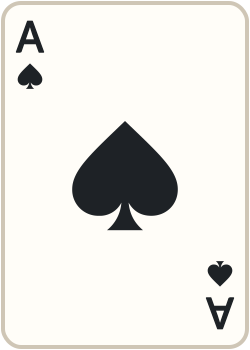
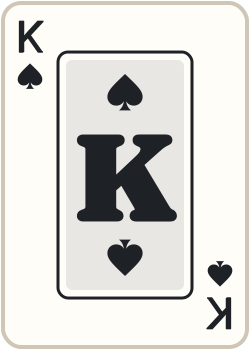
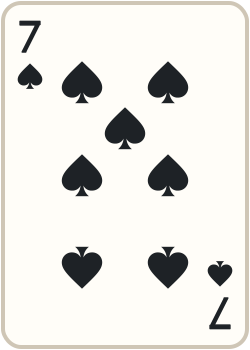
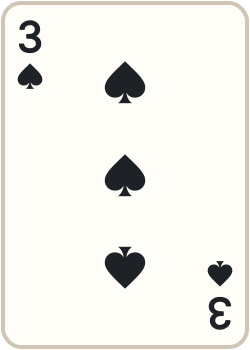
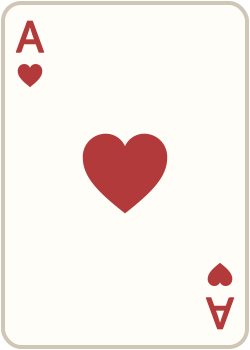
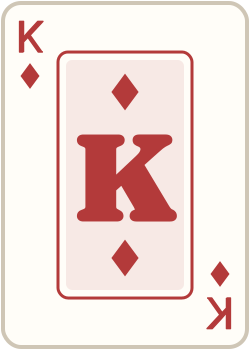
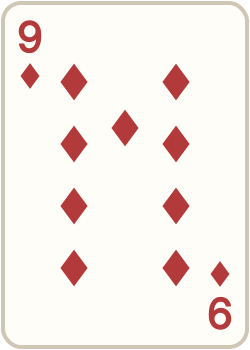
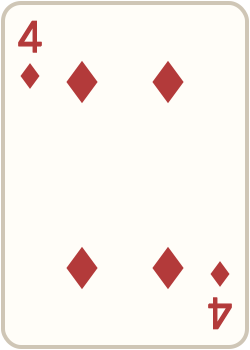
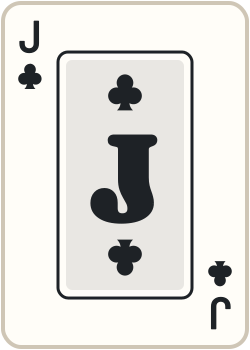
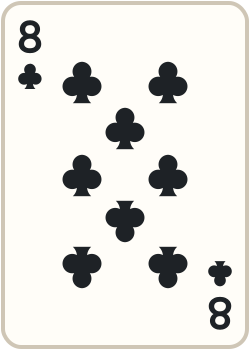
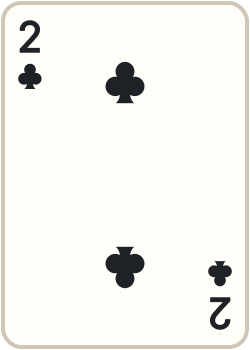
Ace and king of spades, ace of hearts, and a likely trick with the king of diamonds: about four tricks. Bid, starting left of the dealer
There is one round of bidding. The player to the dealer's left goes first, and each player in turn says a number from 0 to 13. You can also bid nil (no tricks), or blind nil if your group allows it, which you have to declare before you look at your cards.
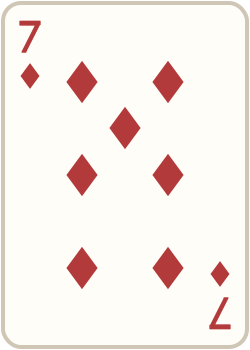
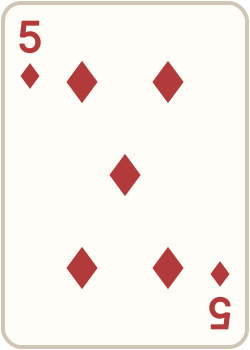
Write every bid down. Your team's contract is your bid plus your partner's. In the picture, your team needs 7 tricks and the other team needs 5. The bids don't have to add up to 13. When they come to less, someone is going to collect bags.
Lead the first trick
The player on the dealer's left leads, which means they play the first card of the first trick. They can lead any suit except spades.
Spades can't be led until they're broken, meaning someone has played a spade on an earlier trick because they had no cards in the suit that was led. The one exception: if you have nothing but spades left in your hand, you may lead one.
Leading the ace of hearts. You can't lead a spade until spades are broken. Follow suit if you can
Going clockwise, each player adds one card to the trick. If you have a card in the suit that was led, you must play one. That rule is called following suit, and it applies even when your only card in that suit is a high one you'd rather save.
If nobody plays a spade, the highest card in the suit that was led wins. A higher card in another suit doesn't count.
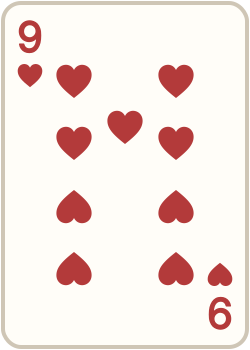
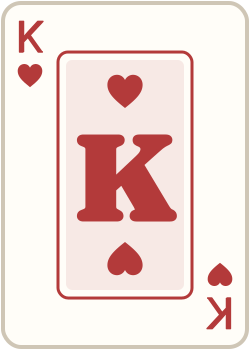
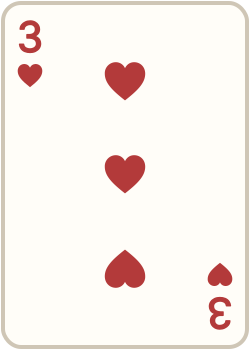
Hearts were led. Everyone followed suit, and the ace of hearts wins the trick. Out of the suit? Trump or throw away
When you have no cards in the led suit, you can play any card you like. Playing a spade is called trumping, and the lowest spade beats the highest card of any other suit. If two or more players trump, the highest spade wins.
You don't have to trump. You can discard (throw away) a card from another suit instead, which is often the smart move when your partner is already winning the trick, or when you're trying to avoid bags.
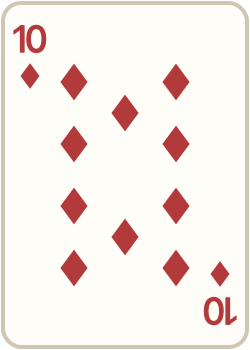
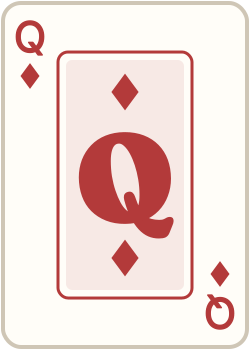
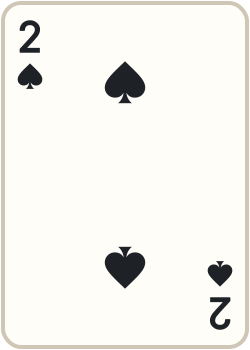
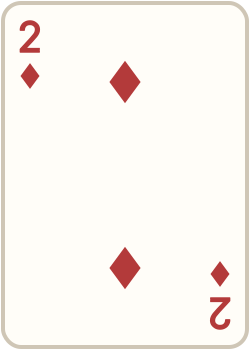
Diamonds were led. The third player had no diamonds and played the 2 of spades, which wins the trick. The winner leads the next trick
Whoever won the trick gathers the four cards, stacks them face down in front of them, and leads the next trick. Keep the stacks separate, or lay each trick crosswise on the last, so you can see how many your team has.
Partners keep their tricks in front of themselves rather than in one pile. That matters if someone bid nil, because their tricks are scored differently.
Keep each trick you win face down in front of you, one small stack per trick, so it's easy to count. Count tricks and score the hand
After all 13 tricks, each team counts what it won and compares that with its contract. Score both teams, add the results to the running totals, and pass the deal to the left.
The tricks always add up to 13. If they don't, recount before you write anything down.
Scoring
Each team scores its own contract. Here are the standard values, which are also the defaults in the score keeper:
| What happened | Points |
|---|---|
| Made your contract | 10 per trick bid, plus 1 per extra trick (bag) |
| Missed your contract | minus 10 per trick bid |
| Nil, no tricks taken | +100 |
| Nil, one or more tricks taken | −100 |
| Blind nil made | +200 |
| Blind nil failed | −200 |
| Every 10 bags | −100 |
Making your contract. If your team bid 7 and won 7, you score 70. If you won 9, you score 70 plus 2 points for the two bags, so 72.
Missing your contract. If your team bid 7 and won only 6, you lose 70. It doesn't matter how close you came. Some groups score a missed contract as 0 instead; see the variants below.
Nil. A nil bid is scored on its own, apart from the partner's bid. The nil bidder's partner still has to make their own bid alone, and any tricks the nil bidder takes don't help with that. If the nil fails, those tricks count as bags for the team.
Bags. Keep a running count of each team's bags from hand to hand. When the count reaches 10, the team loses 100 points, and anything over 10 carries forward. If your team had 8 bags and takes 3 more, you lose 100 and start the next hand with 1 bag. This carry-over is often called rollover.
Winning. The game ends at the end of the hand in which a team reaches 500. If both teams pass 500 on the same hand, the higher score wins. If they're tied, play another hand.
Teams and house rules
Some groups end the game when a team falls to minus 200.
| Round | Team 1 | Team 2 |
|---|---|---|
| No rounds yet. Enter the first round below. | ||
| Total | 0 | 0 |
Round 1
Your game is saved in this browser only, so a refresh won't lose it. Nothing is sent anywhere.
The keeper adds up bids, tricks, nils and bags for you, and you can switch any of the house rules below in its settings. It also has its own page: the spades score keeper.
A worked example
Here are two hands from the same game, scored exactly as the score keeper would score them. In both, you're on Team 1 with your partner.
A made contract with two bags
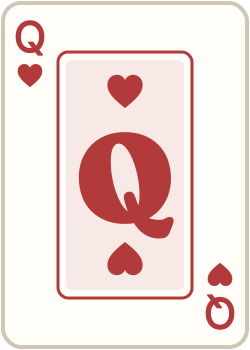
You bid 4 and your partner bids 3, so your team's contract is 7. During play, your queen of hearts wins a trick you didn't expect, and you take 5. Your partner takes 4.
| Bid | Tricks | |
|---|---|---|
| You | 4 | 5 |
| Partner | 3 | 4 |
| Team | 7 | 9 |
Your team needed 7 and won 9, so the contract is made. That's 10 × 7 = 70 points, plus 1 point for each of the 2 extra tricks: 70 + 2 = 72.
Write down the 2 bags as well. They're added to your team's running bag count, and the 100-point penalty comes off when that count reaches 10.
A successful nil
You bid nil and your partner bids 4. All through the hand you play under the cards on the table, and your partner covers you by winning tricks you might otherwise be forced to take. You finish with no tricks, and your partner takes 5.
The nil and the partner's bid are scored separately:
- Your nil worked: +100.
- Your partner bid 4 and took 5: 10 × 4 = 40, plus 1 bag = 41.
The team's score for the hand is 100 + 41 = 141, with 1 bag added to the count.
Now suppose the nil goes wrong instead. You're stuck with the last card in a suit and take 2 tricks, while your partner makes exactly 4. Your team scores −100 for the failed nil and +40 for your partner's bid, so −60 for the hand. Your 2 tricks also go on the team's bag count. The tricks you took don't count toward your partner's 4.
House rules and variants
Spades has a lot of local rules. Settle these before the first deal, and set the score keeper to match.
Strategy tips
- Count your sure tricks, then bid slightly under. Aces and the king of spades are nearly certain. A king in a side suit is a maybe. New players tend to overbid, and a missed contract costs far more than a couple of bags.
- Bid as a team. Listen to your partner's bid before you make yours if you're second. If they bid high, you can bid on the low side, and the other way round.
- Watch your bags late in the game. If your team has 7 or 8 bags, one careless hand can cost 100 points. Once your contract is safe, start ducking: play low cards and let the other team win tricks.
- Set the other team. "Setting" means stopping them from making their contract. If your team's contract is safe and theirs is tight, winning one more trick from them is worth more than avoiding a bag.
- Pick nil hands with care. A good nil hand has no aces or kings, few spades, low spades, and no long suit with high cards. A single high spade can wreck a nil.
- Protect a nil partner. When your partner bids nil, play high on their leads and try to win any trick where they might be forced to take it. Lead suits they're likely to be out of.
- Draw out spades when they're broken. If you hold several high spades, leading them pulls everyone else's spades and makes your side suits safer later.
- Keep track of the spades. There are 13 in the deck. Counting how many have been played tells you when your low spade has become the highest one left.
FAQ
How many points do you need to win at spades?
The standard target is 500. Many groups play to 300, 250 or 200 for a shorter game. If both teams pass the target on the same hand, the higher score wins.
What are bags in spades?
Bags are tricks your team wins beyond its contract. Each is worth 1 point, but every 10 bags your team collects costs 100 points, and the count keeps going from hand to hand.
Can you lead spades on the first trick?
No. Spades can't be led until a spade has been played on an earlier trick by someone who couldn't follow suit. The only exception is a player who has nothing but spades left.
What happens if you bid nil and take a trick?
Your team loses 100 points for the failed nil. The tricks you took don't count toward your partner's bid, but they do count as bags for your team.
Do you have to play a spade if you can't follow suit?
No. When you're out of the suit that was led, you can play any card, spade or not. Throwing away a card from another suit is often better when your partner is already winning the trick.
Do you play spades with jokers?
The standard game uses 52 cards and no jokers. Some groups add both jokers as the two highest spades and remove two low cards so that each player still gets 13.
Jump back to the spades scoring rules, try how to play hearts or the gin rummy rules, or see all our score keepers and tools.