2026 Mahjong Card: What It Is and Where to Buy
The 2026 mahjong card is the official list of winning hands for American mahjong this year. It's published by the National Mah Jongg League, and every player at the table needs their own copy. You buy it from the League. There's no free printable version, because the hands are the League's copyrighted work.
This page explains what the card is, how to read any year's card, and where to get the real one. It doesn't show any hands from the card.
On this page
What the yearly card is
In American mahjong, you can only win with a hand that matches one printed on The cardThe list of winning hands for American mahjong, published each year by the National Mah Jongg League. Every player needs the current year's card.See the full glossary. Each year the National Mah Jongg League, founded in New York in 1937, publishes a new card with new hands. Some hands stay similar from year to year, others change completely, and the hands built on the year's digits are new each time.
That's why American mahjong feels fresh every spring: everyone, from beginners to players with decades of experience, is learning a new set of hands at the same time.
The card is a small folded sheet that sits flat on the table in front of you while you play. You'll look at it constantly, especially at first, so most players keep it face up beside their rack.
When the new card comes out
You can usually order the next year's card from the League early in the year, and the cards are mailed out in spring, typically around April. Orders placed later arrive later, so if your group switches as soon as the new card lands, order early.
Most groups switch to the new card on a set date, or once everyone at the table has one. Until then, they keep playing last year's card.
Standard and large print
The card comes in two main sizes:
- Standard is small enough to sit beside your rack without crowding the table.
- Large print has bigger type and is easier to read across a table or in dim light.
The League lists the standard card at 5 1/8 by 4 inches and the large-print card at 6 1/8 by 4 3/4 inches.
If you're not sure, try a friend's card first. Many players start with standard and switch to large print later. Prices change each year, so check the League's store for the current price.
How to read the card
Every card follows the same structure, so once you can read one, you can read them all.
Sections. Hands are grouped under headings. Each section is built around an idea, such as even numbers, odd numbers, consecutive numbers, winds and dragons, or the digits of the current year. The sections vary from year to year.
One line per hand. Each line is one winning hand: exactly 14 tiles, written as groups of characters with spaces between the groups. Each character is one tile.
Numbers and letters. The notation is short and consistent:
- A number means a suit tile of that number.
- N, E, W and S are the four winds.
- D is a dragon.
- F is a flower.
- 0 is the White Dragon (Soap), used as a zero.
So a group written as four of the same letter means a kong of that tile, and three of the same number means a pung of suit tiles with that number.
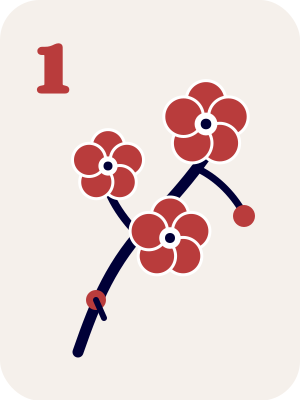


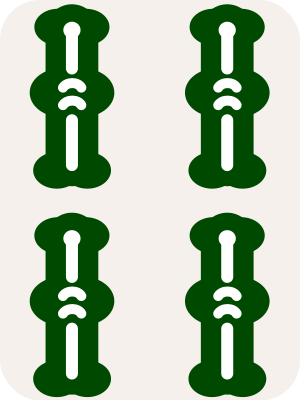

Colors. Groups in a hand are printed in up to three colors. Groups in the same color must be the same suit. A different color means a different suit. The colors don't stand for particular suits, so you decide which suits to use. When a D is printed in the same color as a number group, it means the dragon that goes with that suit: Red with craks, Green with bams, Soap with dots.
X or C. At the end of each line is an X or a C. X (exposed) means you may call discards to build that hand's groups. C (concealed) means you build the hand from your own draws and may only call the very last tile, to win.
Value. The number at the end of the line is the hand's value in points. Simpler, exposed hands are worth less; concealed and difficult hands are worth more. Our American mahjong guide explains how the value is paid out.
Notes in parentheses. Many hands carry a short note, such as which suits or numbers you may choose. Read these carefully: they're the most common source of misread hands.
Where to buy the official card
Buy the card directly from the National Mah Jongg League, on their website or by mail. Many mahjong groups, clubs and community centers also place group orders each year.
Be careful with marketplace sellers. Unofficial copies of the card are sold online every year, and they may be out of date or inaccurate. If a price looks too good, or the listing doesn't come from the League or a group you know, skip it.
Why there's no free printable card
People search for a free printable 2026 card every spring, but there isn't a legitimate one. The hands on the card are created by the League and protected by copyright, and the sale of the card is how the League funds itself. Sites that post the hands are copying them without permission.
What you can print for free is a guide to everything else. Our mahjong cheat sheet covers the tiles, the turn order, calling and the Charleston, and it pairs well with your official card.
Tips for learning a new card
- Read every section once before you play. You don't need to memorize anything, just get a feel for the kinds of hands this year.
- Pick two or three hands after the Charleston. Look at your tiles and find the hands they fit best, then narrow down as you play.
- Watch for the year hands. Hands built on 2026 use 2s, 6s and Soap as zero.
- Mark the hands you like. Many players highlight favorites or note which ones they've won with.
FAQ
Where can I get the 2026 mahjong card?
From the National Mah Jongg League, on its website or by mail. Many clubs also order in bulk for their members.
Is there a free printable 2026 mahjong card?
No legitimate one. The hands are copyrighted by the League, and the card is sold to fund it. Copies posted for free are unauthorized and often contain errors.
When does the new mahjong card come out?
Each spring, usually around April. Orders often open early in the year.
Can I still play with last year's card?
You can, as long as everyone at the table uses the same card. Most groups switch to the new card once everyone has it.
What do X and C mean on the mahjong card?
X means the hand can be exposed, so you may call discards to build it. C means it must stay concealed, so you can only call the final tile to win.
What do the colors on the mahjong card mean?
Groups in the same color are the same suit, and different colors mean different suits. The colors themselves don't stand for a particular suit.
New to American mahjong? Start with how to play American mahjong, learn the tiles, and see the beginner's hub for every guide.