How to Play Hearts: Rules and Strategy
Hearts is a card game for four players, each playing alone, where the aim is to take as few points as you can. Every heart you win costs you 1 point and the queen of spades costs 13. When someone reaches 100 points, the game ends and the player with the lowest score wins.
There's one big twist. If you manage to take every point card in a hand, called shooting the moon, the penalty lands on everyone else instead. This guide walks through a full hand step by step, shows how scoring works with real numbers, and covers the house rules you're likely to meet. The hearts score keeper can add up the scores as you play.
On this page
The goal
A hand of hearts is played as 13 tricks. A trick is one round of play: each player puts down one card, and the highest card in the suit that was led wins all four cards. Most trick-taking games reward you for winning tricks. In hearts, you mostly want to lose them, or at least lose the ones that hold point cards.
There are 26 points in each hand: 13 hearts at 1 point each and the queen of spades at 13. Everything else in the deck is worth nothing. At the end of each hand, you count the points in the tricks you won and add them to your running total.
The game is played over several hands. As soon as anyone's total reaches the end score, usually 100, the game is over and the lowest total wins. You aren't trying to beat one opponent; you're trying to stay below all three.
What you need
- Four players. The standard game is four people with no partners. You can play with three, five or six using the variant below.
- One standard 52-card deck, with the jokers removed.
- A way to keep score. A pencil and paper are enough, or use the hearts score keeper, which handles shooting the moon and saves the game in your browser. There are printable sheets on the score sheets page.
Cards rank from ace (highest) down to 2 (lowest) in each suit. There is no trump suit in hearts, so a card from a different suit never beats the suit that was led.
Setup and dealing
Sit in a circle. Play moves to the left, clockwise, as in most card games.
Choose a first dealer any way you like. The dealer shuffles and deals the whole deck face down, one card at a time, starting with the player on their left. Each player gets 13 cards. The deal moves one seat to the left after each hand.
Sort your hand by suit. Then, before any cards are played, comes the pass.
A turn, step by step
Choose three cards to pass
Look through your 13 cards and pick three you don't want. Most players get rid of dangerous cards: the queen of spades, the ace and king of spades (which can be forced to win a trick holding the queen), and high hearts.
Another good choice is to empty a short suit. If you can pass all your diamonds, you'll be able to throw away unwanted cards whenever diamonds are led.
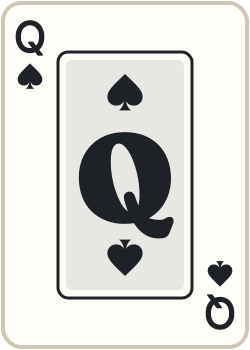
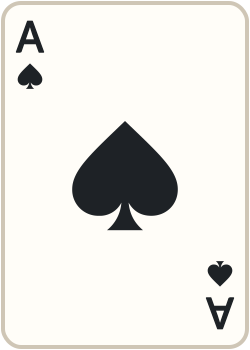
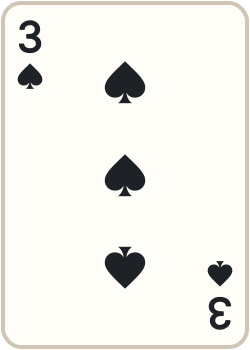
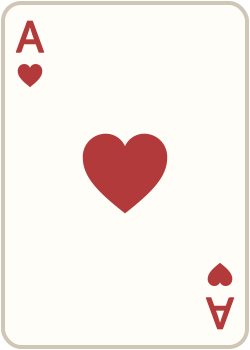
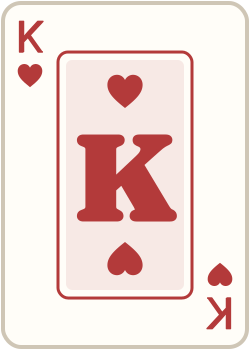
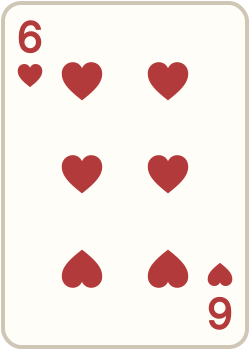
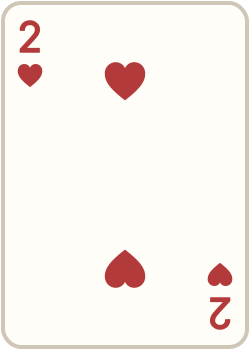
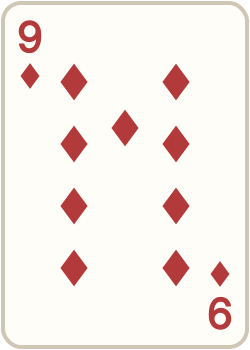
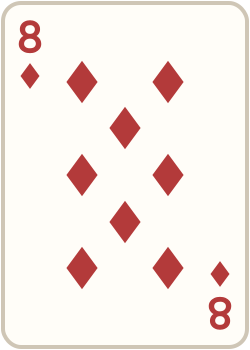
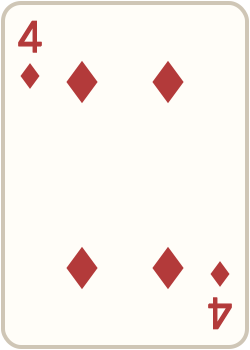
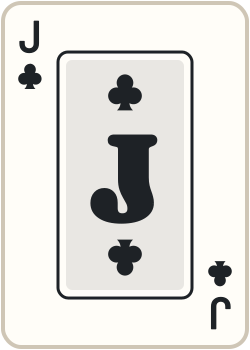
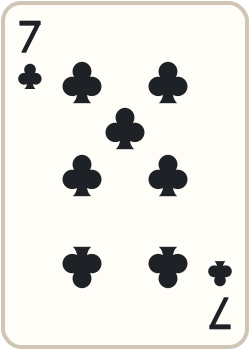
Three cards picked to pass: the queen of spades and two high hearts. Pass left, right or across
Everyone passes three cards face down at the same time. On the first hand you pass to the player on your left, on the second to the player on your right, and on the third to the player across from you. On the fourth hand there is no pass: you play the cards you were dealt. Then the cycle starts again.
Put your three cards down before you pick up the ones passed to you. You can't pass back a card you've just received.
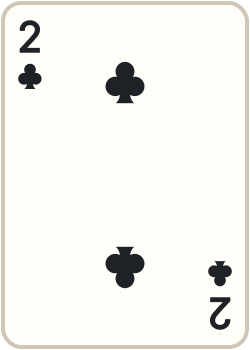
The 2 of clubs leads
The player holding the 2 of clubs leads it, which means they play it as the first card of the first trick. Leading a trick just means playing its first card.
A common rule makes the first trick safe: nobody may play a heart or the queen of spades on it. The one exception is a player with no clubs who holds nothing but hearts and the queen of spades: they may play one of them. Not every group plays this way, so check before you start.
Whoever holds the 2 of clubs plays it to start the first trick. Follow suit if you can
Going clockwise, each player adds one card. If you have a card in the suit that was led, you must play one; this is called following suit. The highest card of the led suit wins the trick.
The winner takes the four cards, puts them face down in front of them, and leads the next trick. Keep your tricks in your own pile, since you'll count the points in them at the end.
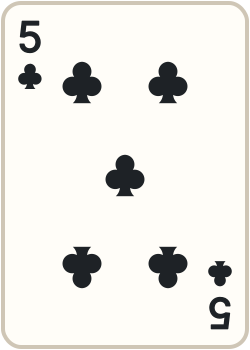
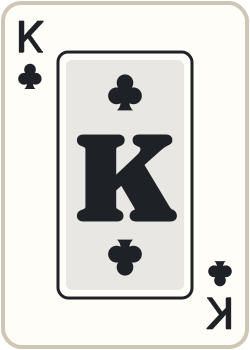
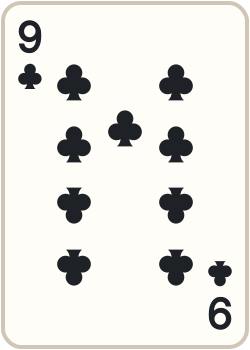
Clubs were led and everyone followed. The king of clubs is highest, so its player wins the trick. Out of the suit? Throw away a point card
If you have no cards in the led suit, you can play any card. Because there are no trumps, it can't win the trick. This is your chance to discard, or throw away, a card you'd rather not keep: the queen of spades, a high heart, or a high card that could win you a trick later.
Being out of a suit is the best defense in hearts. It's why so many players use the pass to empty one.
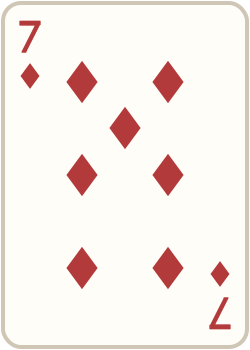
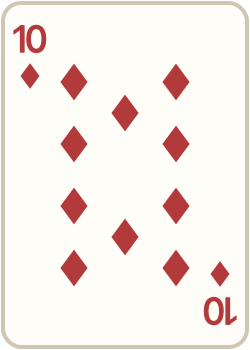
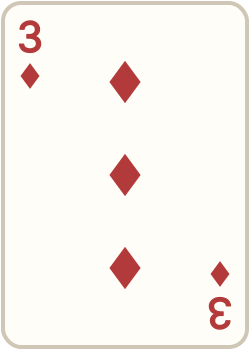
Diamonds were led. The third player had none and dumped the queen of spades. The 10 of diamonds wins, and its player takes 13 points. Wait until hearts are broken
You can't lead a heart until hearts are broken, meaning a heart has been played on an earlier trick by someone who couldn't follow suit. Once that happens, anyone can lead hearts for the rest of the hand.
If your hand holds nothing but hearts, you can lead one even if they haven't been broken.
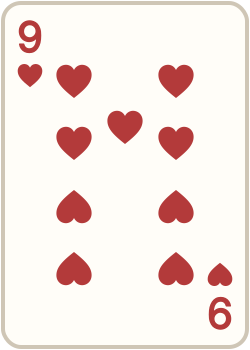
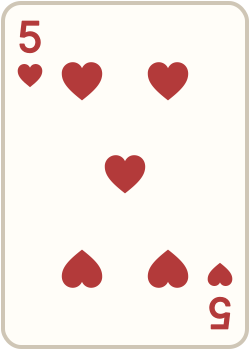
You can't lead any of these until someone has discarded a heart on an earlier trick. Count your points after 13 tricks
When all 13 tricks have been played, each player goes through the tricks they won and counts their points: 1 for each heart and 13 for the queen of spades. The four scores always add up to 26.
Write the scores down, add them to everyone's totals, pass the deal to the left, and play the next hand with the next pass direction.
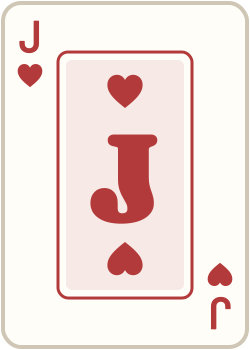
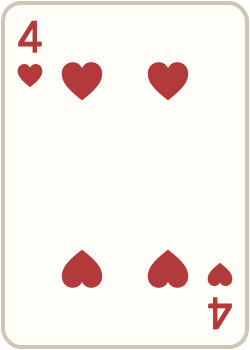
Point cards from one player's tricks: 13 for the queen of spades plus 3 hearts, 16 points.
Scoring
Hearts scoring is simple, and lower is better.
| Card | Points |
|---|---|
| Each heart | 1 |
| Queen of spades | 13 |
| All other cards | 0 |
| Total in each hand | 26 |
Shooting the moon. If one player takes all 13 hearts and the queen of spades in the same hand, they've shot the moon. Instead of taking 26 points, they score 0 and every other player scores 26. Some groups score it the other way, with the shooter subtracting 26 from their own total; see the variants below.
Ending the game. After each hand, check the totals. When anyone has reached 100 or more, the game is over and the player with the lowest total wins. If two players tie for lowest, most groups play more hands until one player is clearly lowest, and the score keeper does the same. Some groups call a tie a shared win instead.
Players and house rules
| Round | Player 1 | Player 2 | Player 3 | Player 4 |
|---|---|---|---|---|
| No rounds yet. Enter the first round below. | ||||
| Total | 0 | 0 | 0 | 0 |
Round 1
Your game is saved in this browser only, so a refresh won't lose it. Nothing is sent anywhere.
Enter each player's points after a hand and the keeper does the rest, including the moon. You can also open it on its own page: the hearts score keeper.
A worked example
Here are two hands, scored the way the score keeper scores them. You're player 1, the Left player is player 2, Across is player 3 and the Right player is player 4.
An ordinary hand: you catch the queen
Late in the hand, diamonds are led and your only diamond left is the king. Nobody plays a higher one, and the Right player, who has no diamonds, drops the queen of spades on the trick. You take no hearts all hand, but that one trick is expensive.
| Player | Point cards taken | Points |
|---|---|---|
| You | queen of spades | 13 |
| Left player | 6 hearts | 6 |
| Across | 4 hearts | 4 |
| Right player | 3 hearts | 3 |
Check the total: 13 + 6 + 4 + 3 = 26. Your score for the hand is 13.
Shooting the moon
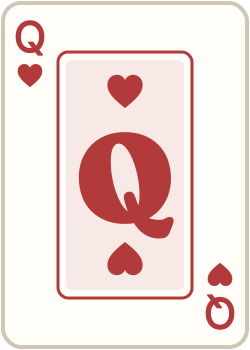
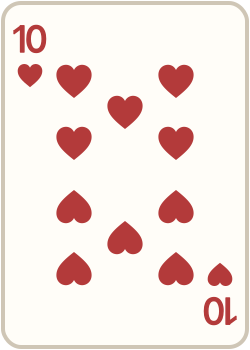
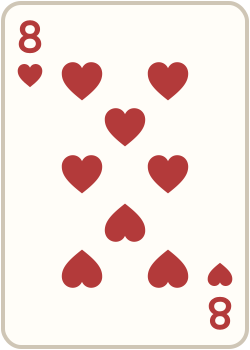
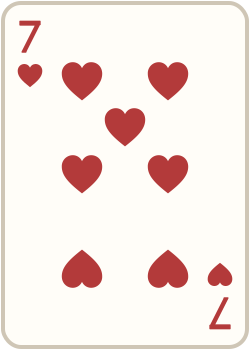
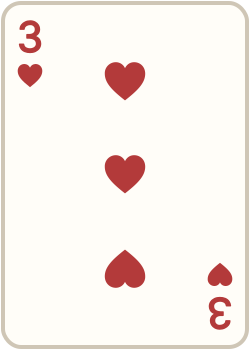
On the next deal you pick up the top hearts, the ace and queen of spades, and high cards in the other suits, so you decide to go for the moon. You win trick after trick, including the one where you play the queen of spades, and you take every heart, including the ones the others were holding. Nobody else takes a single point.
You took all 26 points, so instead of scoring 26 you score 0, and each of the other three players scores 26. The Left player's score for the hand is 26, and so are Across's and the Right player's.
Compare the result with an ordinary hand: rather than you taking all 26 points, the other three take 78 between them.
House rules and variants
Hearts changes a bit from table to table. Agree on these before the first deal.
Strategy tips
- Pass the queen of spades if it's poorly guarded. With fewer than three or four other spades to go with it, the queen is likely to get caught. With plenty of low spades, you can sometimes keep it and wait.
- Be careful with the ace and king of spades. Holding them without the queen is risky, because when spades are led you may be forced to win the trick the queen lands on.
- Make yourself short in a suit. Passing away all your cards in one suit gives you somewhere to throw away hearts and the queen when that suit is led.
- Keep your low cards. Twos and threes are your escape cards. They let you play under a trick late in the hand, when big cards become a liability.
- Lead spades to flush out the queen. If you don't hold the queen or the cards above it, leading low spades can force out whoever has it.
- Watch for a moon attempt. If one player has taken every point so far, make sure someone else takes at least one heart. A single heart kept away from them ends the attempt.
- Go for the moon only with a strong hand. You need high hearts, control of spades and a way to win the lead back. A failed attempt can leave you with most of the points.
- Keep an eye on the scores. Near the end of the game, it often pays to give points to the leader rather than to whoever happens to be next.
FAQ
Who goes first in hearts?
The player holding the 2 of clubs leads it to the first trick, after the pass. From then on, whoever wins a trick leads the next one.
Can you lead hearts at any time?
No. You can't lead a heart until a heart has been discarded on an earlier trick, which is called breaking hearts. The exception is when you have nothing but hearts left in your hand.
What does shooting the moon mean in hearts?
Taking all 13 hearts and the queen of spades in one hand. In the most common rule, you score 0 and every other player scores 26. Some groups let the shooter subtract 26 instead.
How many points does the queen of spades count?
13 points, as much as all the hearts put together. Each heart is worth 1, so every hand has 26 points in total.
What score does a hearts game go to?
The game usually ends when someone reaches 100 points, and the lowest score wins. Some groups play to 50 for a shorter game.
Is there a pass on every hand?
No. The pass goes left, then right, then across, and on every fourth hand nobody passes. Then the cycle repeats.
Jump back to the hearts scoring rules, learn how to play spades or how to play cribbage, or browse all our score keepers and tools.