How to Play Cribbage: Rules, Board and Scoring
Cribbage is a card game for two players where the goal is to be first to score 121 points. You score by making combinations of cards, first while you take turns playing cards to a running count of 31, then by counting the cards in your hand. Every point is marked on a wooden board with pegs, which is where the game gets its look.
This guide teaches the standard two-player game from the first deal to the final peg. It covers the board, the crib, the play and the show, with a full example deal you can follow card by card. When you want more detail on counting a hand, our cribbage scoring guide goes through every combination, and the cribbage hand counter will add up any hand for you.
On this page
The goal
You win by being the first to reach 121 points. There are three ways to score, and they come in a fixed order every deal:
- The play (also called pegging): you and your opponent take turns laying cards face up, keeping a running total. You score for hitting 15 or 31, for pairs and runs, and for playing the last card.
- The show: after the play, each player counts the four cards in their hand together with one shared card, called the starter.
- The crib: an extra four-card hand that belongs to the dealer. Both players put cards into it at the start of the deal, and the dealer counts it last.
Points arrive in small amounts, often only a handful per deal, so a game usually takes a number of deals. Because the dealer gets the crib, the deal alternates and each player gets the extra hand every other time.
What you need
- A standard 52-card deck with the jokers removed. Aces are low and count as 1. Kings, queens and jacks count as 10. Every other card counts as its number.
- A cribbage board with two pegs for each player. If you don't have one, a pencil and paper work fine. You can print a sheet from our free score sheets.
A two-player board has a track of holes for each player. You move up one side, back down the other, and finish in a single game hole at 121. The holes are grouped in fives so you can count moves quickly without counting every hole.
Pegging with two pegs. You never move a peg along the track. Instead, you leapfrog: each time you score, take your back peg and jump it ahead of your front peg by the number of points you scored. The gap between your two pegs always shows your last score, so your opponent can check it at a glance, and if you knock a peg loose, the other one still marks your place.
Setup and dealing
Each player cuts the deck, and the player who cuts the lower card deals first. After that, the deal alternates every hand.
The dealer shuffles and deals six cards to each player, one at a time, starting with the opponent. Each player then chooses two cards to lay away, face down, into the crib. The crib sits beside the dealer and stays hidden until the end of the deal.
Next comes the starter. The non-dealer cuts the remaining deck, and the dealer turns over the top card of the bottom part and places it face up on the rest of the deck. This card is the starter. It isn't played, but it counts as a fifth card for both hands and the crib in the show.
If the starter is a jack, the dealer pegs 2 points straight away. This is called his heels.
A turn, step by step
Here is one full deal for two players. You are the non-dealer, and your opponent deals. Follow the cards and the board as you go.
Look at your six cards
You and your opponent each get six cards. Before anything else, you each decide which four to keep. Think about the combinations your four cards make together, because those are what you'll count in the show.
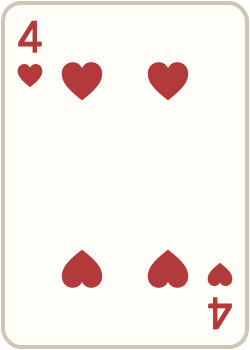
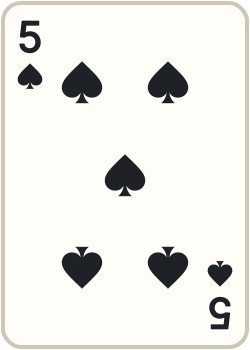
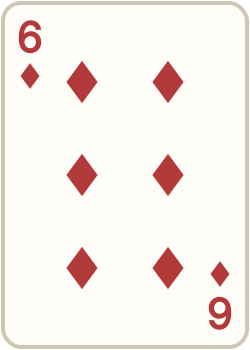
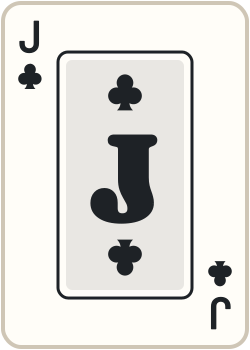
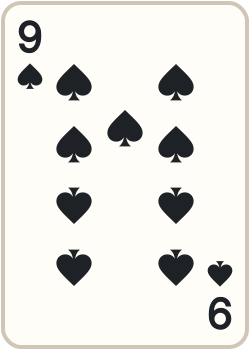
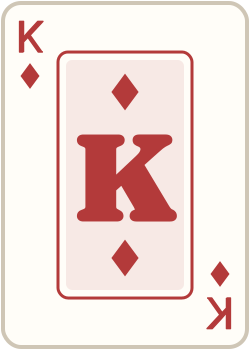
Your six cards. Four will stay in your hand; two go to the crib. Lay away two cards to the crib
Put two cards face down into the crib. Since your opponent is dealing, the crib will score for them, so you don't want to give it anything useful. Here you keep 4-5-6 and the jack, and throw the 9 and king. Your opponent also throws two cards, so the crib ends up with four.
You keep a run with a five and a jack, and lay the nine and king face down in the crib. Cut the starter
You cut the deck and your opponent turns the starter: the 5 of clubs. That's a good card for you, because fives make fifteen with every ten-card. Had it been a jack, the dealer would have pegged 2 for his heels before anyone played a card.
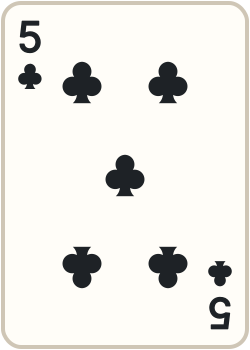
The starter, turned face up on the deck: the five of clubs. Play cards and count aloud
The non-dealer always plays first. You lay the 4 of hearts and say "four". Your opponent plays the 5 of diamonds: "nine". You play the 6: "fifteen for two, and a run of three for three", so you peg 5. Your opponent adds the 7, making a run of four (4-5-6-7) at 22, and pegs 4. You play your other 5 for 27. The last three cards, 6-7-5, make a run of three, so you peg 3. Runs in the play don't need to be laid in order. Your opponent plays the 2 for 29.
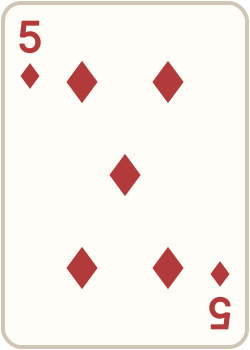
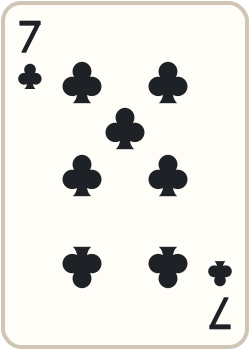
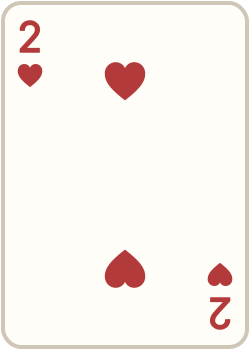
The play so far, in order: 4, 9, 15, 22, 27, 29. Each player keeps their own cards face up in front of them. Say go when you can't play
The running total can never go above 31. Your last card is the jack, which would make 39, so you say "go". Your opponent then plays any cards they can that keep the count at 31 or less. They can't play the 10 either, so they peg 1 for the go, since they played the last card of the series. The count goes back to zero, and you lead next because you didn't play the last card. You play the jack ("ten") and your opponent plays the 10 ("twenty"). That's the last card of the whole play, so it scores 1.
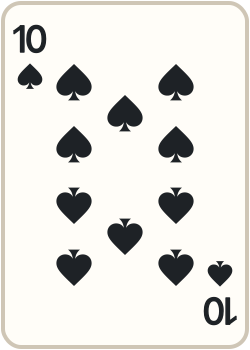
The count is 29. Your jack and your opponent's ten would both go over 31, so this series is over. Leapfrog your pegs
Peg every score the moment you make it. You scored 5, so your front peg went to hole 5. Then you scored 3, so your back peg jumped from the start to hole 8. Your opponent pegged 4, then 1, then 1, leaving their pegs at 5 and 6. You lead 8 to 6.
Count your hand first in the show
Now everyone picks their cards back up. The non-dealer always counts first, using their four cards plus the starter. Your hand is worth 17: four fifteens for 8, a pair of fives for 2, two runs of three for 6, and 1 for the jack of clubs matching the starter's suit (his nobs). The full count is in the worked example below. Your back peg jumps from 5 to 25.
Your hand with the starter: 17 points. The dealer counts their hand, then the crib
Your opponent counts their hand next: two fifteens (each five with the 10) and a pair of fives, for 6. Then they turn over the crib and count it as a second hand, also with the starter. The king and the 5 make fifteen for 2. After one deal you lead 25 to 14.
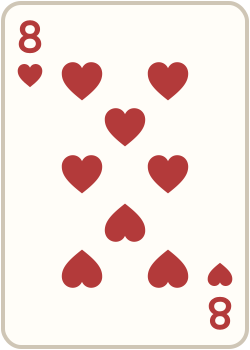
The dealer's hand (6 points), the crib (2 points) and the shared starter. Pass the deal and race to 121
Gather the cards, and the deal passes to the other player. Keep playing deals until someone reaches 121. The game ends the moment that happens, even in the middle of the play. Here you need 5 more, and your opponent hasn't reached 91 yet, so if you peg out now you win by a skunk.
Scoring
Here are all the ways to score in two-player cribbage. For a full walkthrough of counting a hand, with a calculator, see cribbage scoring.
During the play
| Combination | Points |
|---|---|
| Making the count exactly 15 | 2 |
| Making the count exactly 31 | 2 |
| Pair (same rank as the card just played) | 2 |
| Three of a kind in a row | 6 |
| Four of a kind in a row | 12 |
| Run of three or more, in any order | 1 per card |
| Go, or the last card of the play | 1 |
Hitting 31 scores 2 in total, not 2 plus 1 for the last card. There are no flushes in the play. Pairs and runs only count among the cards played in a row since the count last started at zero.
In the show (each hand and the crib, counted with the starter)
| Combination | Points |
|---|---|
| Each combination of cards adding to 15 | 2 |
| Each pair | 2 (three of a kind is 6, four of a kind 12) |
| Each run of three or more | 1 per card, for every different way to make it |
| Flush: all four hand cards one suit | 4, or 5 if the starter matches |
| Flush in the crib | 5, only if all five cards match |
| His nobs: the jack of the starter's suit, in hand | 1 |
Other points
- His heels: a jack turned as the starter gives the dealer 2.
- The highest possible hand is 29. A few totals, including 19, 25, 26 and 27, can't be made at all.
The order of counting matters near the end of a game. The non-dealer counts first, so if both of you are close to 121, the non-dealer may get there before the dealer counts at all.
A worked example
Here is your hand from the deal above, counted in full.
Your hand: 4, 5, 6 and jack of clubs, with the 5 of clubs turned
Start with fifteens. 4 + 5 + 6 makes 15, and you can make it twice, once with each five: 4 points. Each five also makes 15 with the jack: 4 more. That's 8 for fifteens.
Next, pairs. The two fives are a pair: 2 points, for 10 so far.
Then runs. 4-5-6 is a run of three, and again you have two of them, one with each five: 6 points, for 16.
No flush: the hand has four different suits.
Last, his nobs. Your jack is a club, and so is the starter: 1 point. The total is 17.
Notice how the second five doubled almost everything. Cards that repeat a rank are where big hands come from.
House rules and variants
Strategy tips
- Keep fives and ten-cards. A five makes fifteen with every ten, jack, queen and king, and there are 16 ten-value cards in the deck. A hand with a five and some tens rarely scores nothing.
- Watch what you give the crib. When it's your crib, throw cards that work together, such as a pair, two cards next in rank, or a five with a ten-card. When it's your opponent's crib, throw cards far apart in rank, and avoid giving them fives.
- Keep runs and pairs together. Hands like 4-5-6 with a spare 5 or 6 score heavily once the starter adds to them, as the example showed.
- Don't lead a five. If you open the play with a five, any ten-card lets your opponent make fifteen for 2. A card below five is a safer lead, because your opponent can't reach fifteen with one card.
- Be careful at 21. If you make the count 21, a ten-card from your opponent hits 31 for 2.
- Pairs invite trips. Pairing your opponent's card earns 2, but if they hold the third card of that rank, they score 6. Think about how many of that rank are still out.
- Count the gap near the end. In the last few deals, check how far each of you is from 121 and remember that the non-dealer counts first. Sometimes playing for small, safe pegging points matters more than a big hand.
FAQ
How many cards do you deal in cribbage?
In the two-player game, six cards each. Each player lays two away into the crib, so you play with four. With three or four players, each player gets five and lays one away.
Who counts first in cribbage?
The non-dealer counts their hand first, then the dealer counts their hand, then the dealer counts the crib. Near the end of a game this order can decide the winner.
What does go mean in cribbage?
You say "go" when you can't play any card without taking the count above 31. Your opponent keeps playing whatever they can, then scores 1 for the go, or 2 if they hit exactly 31. The count then starts again from zero.
What is his heels in cribbage?
If the starter card is a jack, the dealer pegs 2 points right away. It's different from his nobs, which is 1 point for holding the jack of the starter's suit in your hand or crib.
What is a skunk in cribbage?
Winning before your opponent reaches 91 points. Many players count it as a double win. A double skunk, when the loser hasn't reached 61, is a house rule some groups add.
What is the best possible cribbage hand?
29 points: three fives and the jack in your hand, with the fourth five of the jack's suit as the starter. The cribbage scoring guide counts it point by point.
Count any hand with the cribbage hand counter, check the scoring table, or try another two-player classic in our gin rummy rules. For a group, learn how to play hearts, or browse all our tools.