How to Play Rummy: Rules for Beginners
Rummy is a card game for 2 to 6 players. On each turn you draw a card, lay down groups of matching cards if you can, and discard one card. The first player to get rid of every card wins the hand and scores points for the cards still stuck in everyone else's hand.
This guide covers basic rummy, sometimes called straight rummy or rum, the version most families learn first. Once you know it, the two-player game gin rummy and the partnership game canasta will feel familiar.
On this page
The goal
Your aim in each hand is to empty your hand by forming melds, groups of cards laid face up on the table. There are two kinds:
- A set is three or four cards of the same rank, such as three 8s.
- A run is three or more cards in a row in one suit, such as the 5, 6 and 7 of spades.
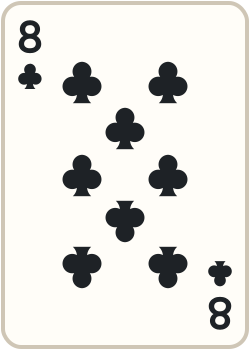
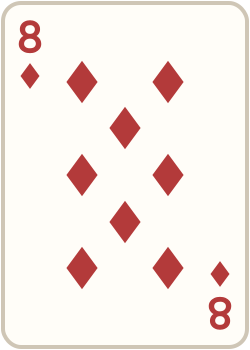
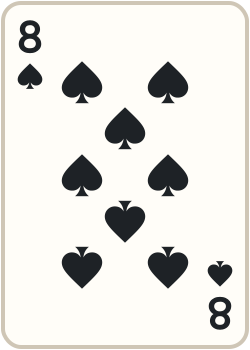
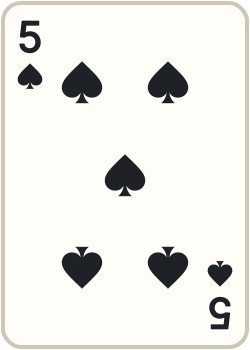
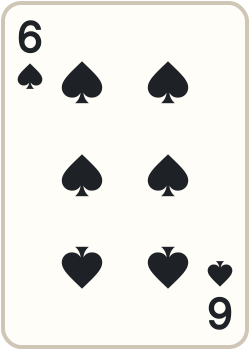
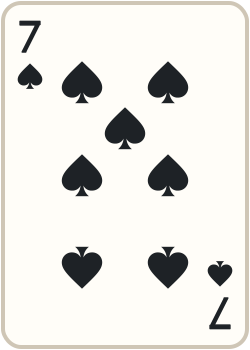
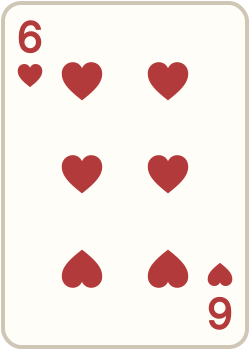
A run must stay in one suit, so 5 of spades, 6 of hearts, 7 of spades is not a meld. A set uses different suits by nature, because a single deck has only one card of each rank in each suit. That also means a set can never be bigger than four.
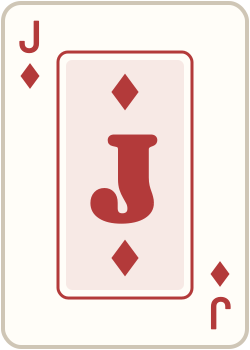
You can also add single cards to melds that are already on the table, yours or anyone else's. When your last card leaves your hand, you've gone out, and the hand ends.
Points carry over from hand to hand. Rummy has no single standard target score, so your group agrees one before you start. A game to 100 points is a common choice.
What you need
- One standard 52-card deck, with the jokers taken out.
- 2 to 6 players. Rummy works well with any number in that range. With two, many people prefer gin rummy, which is built for a pair.
- A table with room for melds. Everyone's melds go face up in front of them, and you'll want to see all of them.
- A way to keep score. Paper works, or use the rummy score keeper, which adds up each hand for you.
Card values
These values only matter at the end of a hand, when you count what's left:
| Card | Points |
|---|---|
| King, queen, jack | 10 |
| 2 to 10 | Face value |
| Ace | 1 |
In the standard game, aces are low. A-2-3 of a suit is a run, but Q-K-A is not. Some groups play aces high or low as a house rule; see house rules and variants.
Setup and dealing
Choose a dealer any way you like, such as cutting the deck for the low card. The dealer shuffles and deals the cards one at a time, face down, starting with the player on their left and going around the table to the left.
How many cards each player gets depends on how many are playing:
| Players | Cards each |
|---|---|
| 2 | 10 |
| 3 or 4 | 7 |
| 5 or 6 | 6 |
Put the rest of the deck face down in the middle. This is the stock, the pile everyone draws from. Turn its top card face up next to it to start the discard pile.
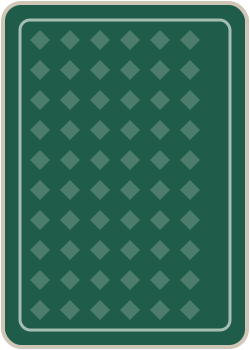
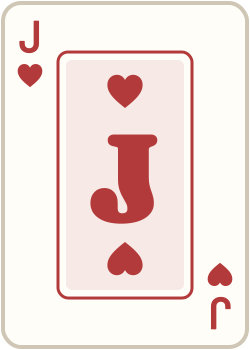
The player to the dealer's left takes the first turn, and play then passes to the left. Pick up your cards and sort them by suit and rank so you can spot melds that are close to complete.
A turn, step by step
Draw one card
Take the top card of the stock or the top card of the discard pile. Everyone can see what you take from the discard pile, so it gives a hint about your hand. Take it when it clearly helps; otherwise the stock keeps your plans quiet.
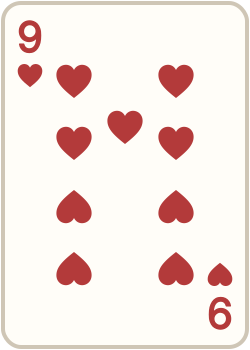
Draw from the stock, or take the 9 of hearts from the top of the discard pile. Lay down a meld (if you want to)
If you hold a set or a run, you may put it face up in front of you. You can lay down as many melds as you like in one turn, or none at all. Holding melds back keeps the others guessing, but any card still in your hand counts against you if someone else goes out.
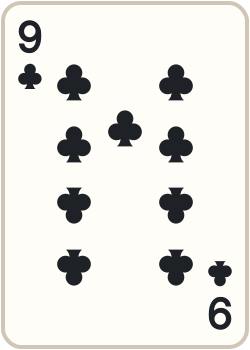
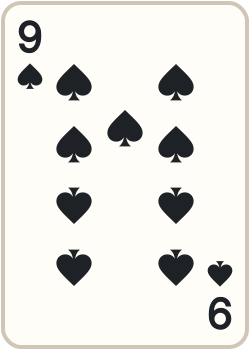
Three 9s laid face up on the table. Lay off cards (if you want to)
To lay off is to add a single card to a meld already on the table. You can lay off on your own melds or on anyone else's: a fourth card on a set, or the next card at either end of a run. The card stays where you put it, and it's simply out of your hand.
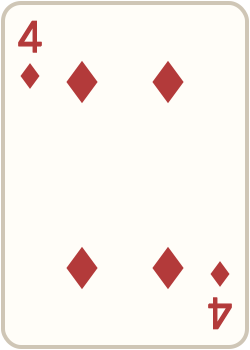
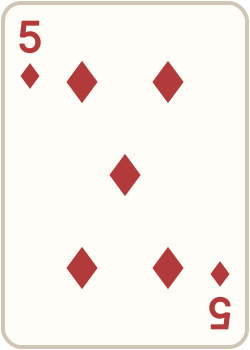
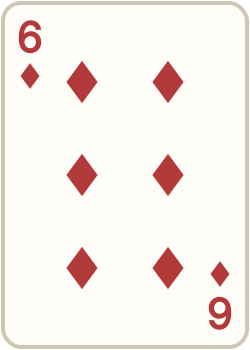
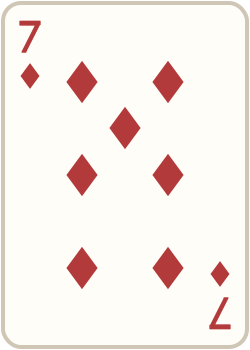
Another player's run of 4-5-6 of diamonds, with your 7 of diamonds laid off on the end. Discard one card
End your turn by placing one card face up on the discard pile. If you took the top discard this turn, you can't throw that same card straight back. If you drew from the stock, you may discard the card you drew.
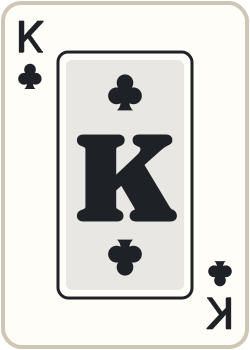
Discard face up onto the pile. A high card you can't use, like this king, is a common choice. Go out
You go out when your last card leaves your hand, whether you meld it, lay it off or discard it. The hand stops right away, and everyone else counts the cards they're still holding.
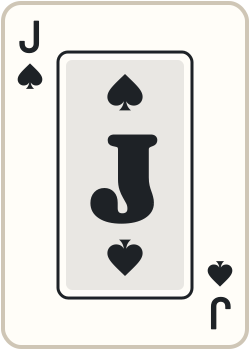
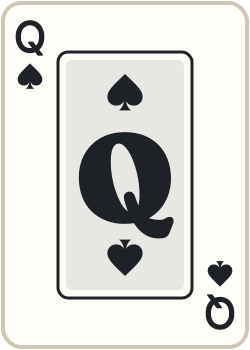
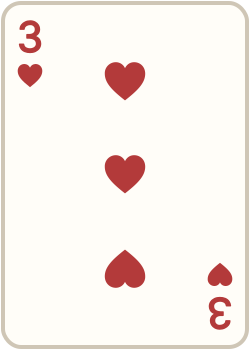
Lay down the last meld, then discard the 3 of hearts: your hand is empty and you've gone out.
Here's how a turn might look. You hold the 9 of clubs, 9 of spades, 7 of diamonds, king of clubs and three other cards, and the top discard is the 9 of hearts. You take it and lay down the three 9s. Another player has 4-5-6 of diamonds on the table, so you lay off your 7 of diamonds on it. Then you throw the king of clubs. You started the turn with seven cards and end it with three.
If the stock runs out before anyone goes out, most groups turn the discard pile over to make a new stock (some shuffle it first) and carry on.
Scoring
Only the player who goes out scores. They add up the value of every card left in the other players' hands: 10 for each king, queen and jack, face value for 2 to 10, and 1 for each ace. Melds already on the table don't count, for anyone.
Going rummy. If you go out in a single turn, laying down your whole hand at once with no melds or layoffs on any earlier turn, you've gone rummy. Your score for the hand is doubled.
To count quickly, group the leftover cards: put the kings, queens and jacks together and count them in tens, then add the number cards and aces. Each player can count their own hand out loud while the winner checks it.
Scores carry over from hand to hand, and the deal passes to the left (with two players, take turns, or let the winner deal). The first player to reach your agreed target wins. If you haven't agreed one, 100 points is a common choice.
| Situation | Points for the winner |
|---|---|
| Going out | Total of the cards left in every other hand |
| Going rummy | That total, doubled |
| Ace left in a hand | 1 (15 if your group plays aces high) |
| Game to | Agreed by your group; 100 is common |
The score keeper below follows these rules. Enter who went out and how many points each other player was left holding, and it keeps a running total for everyone. You can set the target, and switch on aces high or turn off the rummy double, to match your table.
Players and house rules
Rummy has no fixed target. Agree on one, such as 100.
| Round | Player 1 | Player 2 | Player 3 |
|---|---|---|---|
| No rounds yet. Enter the first round below. | |||
| Total | 0 | 0 | 0 |
Round 1
Your game is saved in this browser only, so a refresh won't lose it. Nothing is sent anywhere.
The same tool is on its own page as the rummy score keeper.
A worked example
Three people are playing, so each was dealt 7 cards. After several turns, you lay down your last meld and discard your final card. You've gone out. Here's what the other two players are still holding.
Going out against two hands
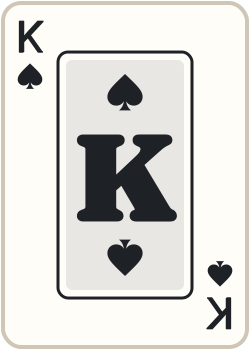
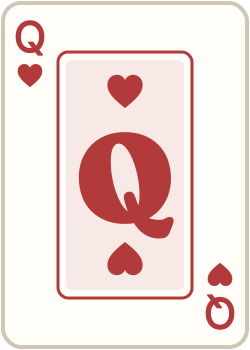
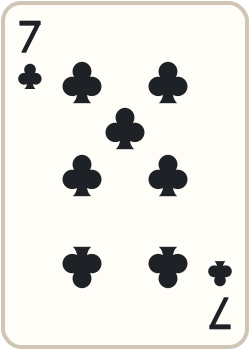
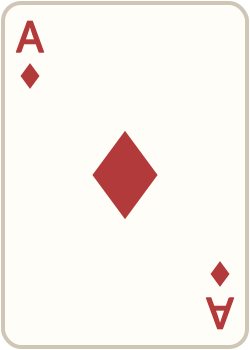
You add the two hands together: 14 + 23 = 37 points, all to you. The other two players score nothing for this hand.
If your group played aces as 15, Player 3's ace would count 15 instead of 1. Their hand would be worth 37, and your total would be 51.
Going rummy doubles the score
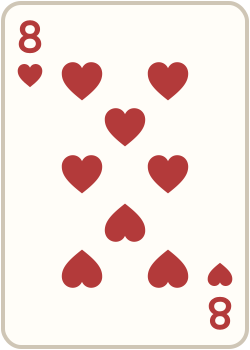
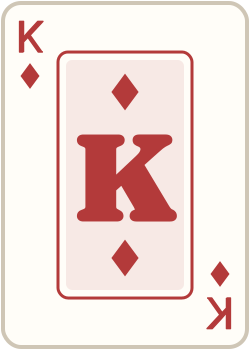
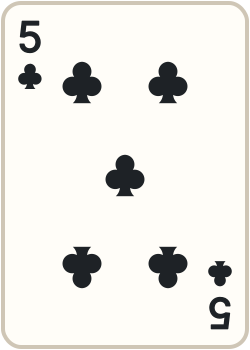
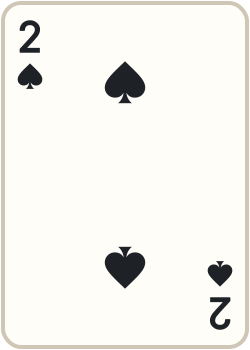
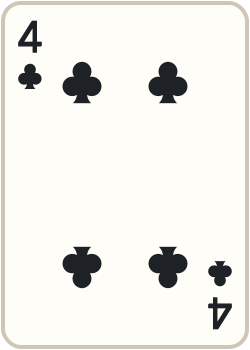
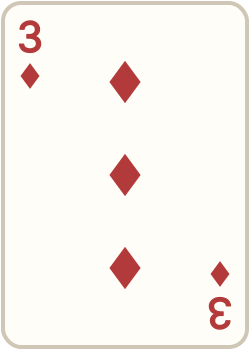
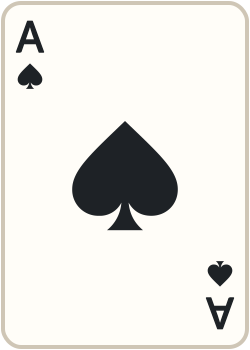
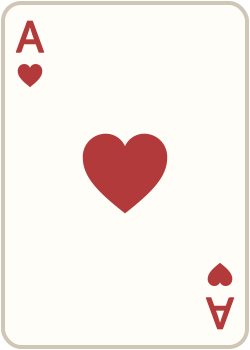
The cards left come to 20 + 9 = 29. Because you went out all at once, with no earlier melds or layoffs, you went rummy and the score doubles: 29 × 2 = 58 points.
House rules and variants
Strategy tips
- Get rid of high cards early. A king left in your hand costs 10 points when someone goes out. A 2 costs only 2. Unless a high card is close to a meld, let it go.
- Don't hold melds back too long. Keeping a meld in your hand can set up going rummy, but if another player goes out first, you pay for every card in it.
- Lay off whenever it's free. Adding a card to someone else's meld costs you nothing and shrinks your hand. Look at every meld on the table before you discard.
- Watch the discard pile. When a player takes a card from the pile, note it. If someone picks up the 6 of hearts, think twice before throwing the 5 or 7 of hearts, or another 6.
- Keep cards that can grow two ways. A 7 of clubs held with the 8 of clubs and the 7 of diamonds could end up in a run or a set. That flexibility is worth more than a lone card that fits only one meld.
- Plan for layoffs. A run with open ends, such as 6-7-8 of hearts, gives you, and everyone else, places to lay off later. If you're holding the 5 or 9 of hearts, you may be able to dump it on your own run next turn.
- Break up a pair when you have to. Two cards toward a set are only useful if the third is still out there. If you've seen one of the missing cards go into someone's meld, the pair is a weaker bet than it looks.
- Count the other hands. When an opponent is down to one or two cards, they may go out on their next turn. Dump your highest cards, or lay down what you can, before it costs you.
FAQ
How many cards do you deal in rummy?
10 each for two players, 7 each for three or four, and 6 each for five or six. The next card starts the discard pile and the rest is the stock.
Can you lay off on another player's melds?
Yes. In basic rummy you can add cards to any meld on the table, yours or anyone else's, as long as the meld stays a valid set or run.
Do you have to discard to go out?
No. You go out as soon as your last card leaves your hand, whether you meld it, lay it off or discard it.
What does it mean to go rummy?
Going out in one turn, laying down your whole hand at once without having melded or laid off before. In the common rules it doubles your score for that hand.
Is an ace high or low in rummy?
Low in the standard game, worth 1 point. Some groups allow aces high as well, and then an ace left in your hand counts 15.
What score do you play rummy to?
There's no standard target, so agree one before you start. 100 points is a common choice, especially with three or four players.
Try the two-player version in gin rummy rules, move on to canasta rules, check the rummy scoring rules again, or browse all our tools.