Mahjong for Beginners: Rules, Tiles and Styles
Mahjong is a tile game for four players. Each turn you draw a tile and discard one, building toward a complete hand, and the first player to finish wins. The rules of a turn take a few minutes to learn; choosing which tiles to keep is what makes the game worth coming back to.
This page is your starting point. It explains what mahjong is, how the three main styles differ, what you need to play, and which of our guides to read first.
On this page
What mahjong is
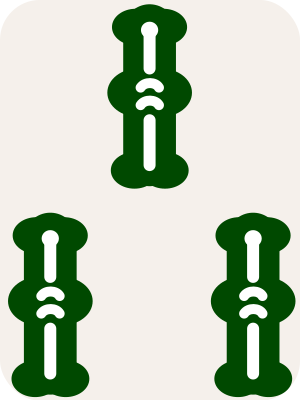
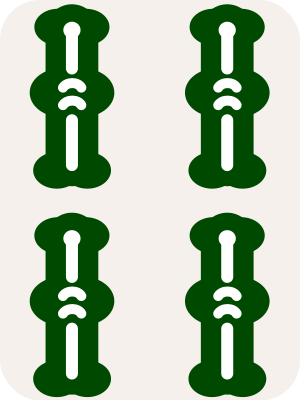
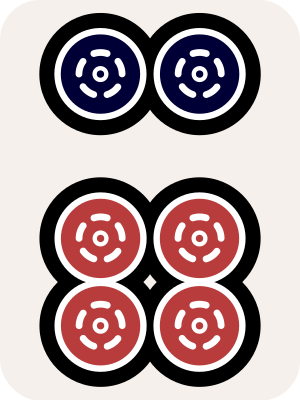
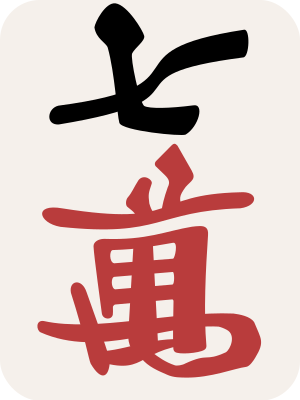
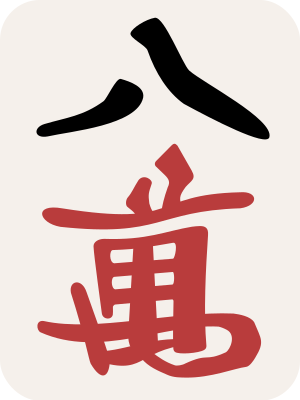
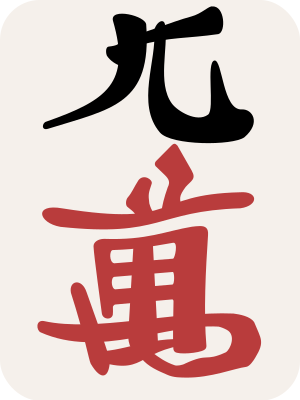
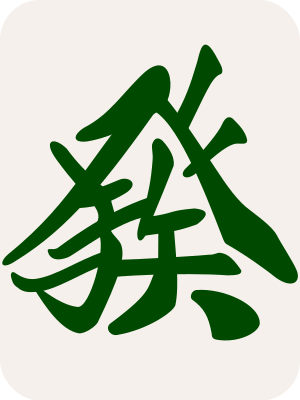
Mahjong is played around a square table. The tiles look a little like dominoes, but they work more like playing cards: there are suits numbered 1 to 9, picture tiles called honors, and in some styles bonus tiles and jokers.
Every player starts with 13 tiles hidden from the others. In turn, you draw a tile, then discard one face up in the middle of the table. If someone else discards a tile you need, you can often call it and take it instead of drawing. Bit by bit, you shape your hand into the pattern your style counts as a win, and when you complete it you call "Mahjong!"


The game grew up in China in the second half of the 1800s, most often linked to the area around Ningbo, and developed from older card games. It reached the United States in the early 1920s, when boxed sets with English labels and simplified rules set off a nationwide craze. Since then it has grown into several distinct styles.
American vs. Chinese vs. Japanese mahjong
The three styles you're most likely to meet share the same rhythm of draw, discard and call. They differ in their tiles, what counts as a winning hand, and how you score.
American mahjong is played with 152 tiles, including eight jokers. Before play, everyone swaps tiles in a passing round called the CharlestonThe tile swap at the start of an American mahjong hand. Everyone passes three unwanted tiles right, then across, then left, and may agree to a second round and a final courtesy pass.See the full glossary. Every winning hand has to match one printed on that year's The cardThe list of winning hands for American mahjong, published each year by the National Mah Jongg League. Every player needs the current year's card.See the full glossary, published by the National Mah Jongg League, so the game changes a little every year. This is the style behind most new mahjong groups in the US.
Chinese mahjong, most often played in the Hong Kong style, uses 144 tiles including flowers and seasons. A winning hand is four sets and a pair, and sets can include runs called ChowThree tiles in a row in the same suit, such as 4-5-6 of dots. Used in Chinese and Japanese mahjong, not in American mahjong. You can call a chow only from the player on your left.See the full glossary. Scoring counts features of your hand in FaanThe scoring unit in Hong Kong mahjong. Each feature of a winning hand is worth a number of faan, and the total sets how much the hand is paid.See the full glossary.
Japanese mahjong, also called riichi, uses 136 tiles with no flowers. A winning hand is again four sets and a pair, but it must also contain at least one scoring pattern. It's popular online and in video games, and it has its own detailed scoring.
| American | Chinese (Hong Kong) | Japanese (riichi) | |
|---|---|---|---|
| Tiles | 152 | 144 | 136 |
| Winning hand | A hand from this year's card | Four sets and a pair | Four sets and a pair, with a scoring pattern |
| Jokers | 8 | None | None |
| Runs (chows) | Not called | Yes | Yes |
| Swap before play | The Charleston | No | No |
Which should you learn? Learn the style your friends or group play. If you're starting from scratch with no group in mind, the classic four-sets-and-a-pair game is a good foundation, because Chinese and Japanese mahjong both build on it and it teaches the turn clearly. If you're joining an American group, go straight to the American guide.
What you need
- A set that matches your style. American groups need an American set with jokers and racks; Chinese and Japanese players need a set without jokers. Our tile guide shows what's in each, and the mahjong sets guide explains what to look for.
- Four players, or two or three with adjusted rules.
- Dice, usually two or three, to decide where the wall is opened.
- A square table, ideally with a mat to quiet the tiles. Regular hosts may want a mahjong table.
- For American mahjong, this year's card for every player.
Many groups also keep a pad for scoring, or play for small stakes with chips or coins.
How a game night works
A typical evening goes like this. Everyone sits down, rolls the dice to choose the first dealer, and builds the wall together. Each hand takes somewhere between five and fifteen minutes once everyone knows the rules, and after each one the tiles are shuffled and a new wall is built. The deal moves around the table, so everyone takes a turn as East.
Scores are kept as you go, on paper or with chips, and settled at the end. Many groups set a time to stop rather than playing a fixed number of rounds. Snacks are traditional, but keep them off the table: sticky tiles are no fun.
If you're hosting beginners, play the first hand with everyone's tiles face up, and talk through each choice out loud. It's the quickest way to learn.
Is mahjong hard to learn?
Less than it looks. A turn is simple: draw a tile, decide what to keep, discard one. Most beginners can play a slow hand after an hour of instruction, and feel at ease after a few sessions.
What takes longer is strategy and scoring: knowing which hand to aim for, reading what other players are collecting, and counting the score when someone wins. You don't need any of that to start. Many groups play their first few hands with tiles face up and the teacher thinking out loud.
A few things make the start easier:
- Learn the tiles first. Ten minutes with the tile guide saves a lot of confusion at the table, especially with craks, where the number is a Chinese character.
- Keep a cheat sheet nearby. Our printable cheat sheet fits on one page.
- Ask about house rules. Every group has a few. Asking before you start avoids surprises.
Where to start
Read these in order if you're brand new:
- How to play mahjong: the core game, step by step, with a picture for every step and a full example round.
- Mahjong tiles: every tile, with an interactive guide to the American, Chinese and Japanese sets.
- Your style's guide: American mahjong, with a Charleston trainer, or Chinese mahjong, with simple scoring.
Then keep these handy:
- Printable mahjong cheat sheet for the table.
- The 2026 mahjong card: what the American card is, how to read it and where to buy it.
- Mahjong glossary: every term, explained simply.
- Mahjong winning hands: how winning hands are built in each style.
- Mahjong strategy: tips for your first games.
- Mahjong with two or three players: when you can't find a fourth.
FAQ
How many people play mahjong?
Four is standard. Two- and three-player versions exist, with some tiles or rules changed.
Is mahjong a gambling game?
It can be played for money, but it doesn't have to be. Many groups play for points or small coin stakes, and plenty play just for fun.
What is the easiest kind of mahjong to learn?
The classic four-sets-and-a-pair game used in Chinese mahjong has the fewest special rules, so it's a good first step. If your friends play American mahjong, learn that instead: it's the style you'll actually play.
Is mahjong the same as the matching game on my phone?
No. The solitaire game where you match pairs of tiles to clear a board uses mahjong tiles, but it's a different game. Real mahjong is played by four people drawing and discarding tiles.
How long does it take to learn mahjong?
Most people can play a basic hand after an hour or so of instruction, and feel comfortable after a few sessions. Scoring and strategy take longer, but you can play without mastering them.